Thursday, November 30, 2006
Disporopsis arisanensis
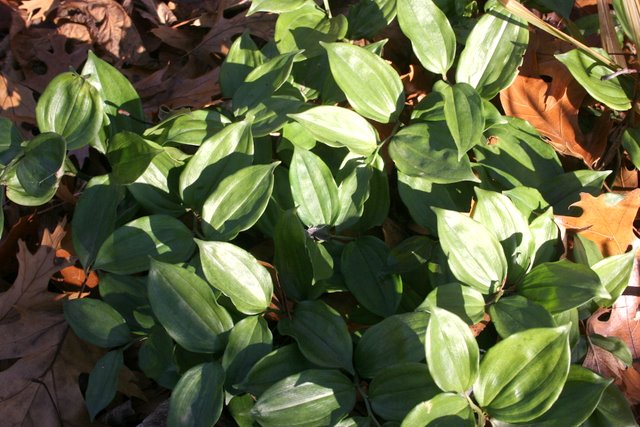 Disporopsis arisanensis is one of the members of a small genus of evergreen Solomon's seals. In the spring it has cream and green bells hanging underneath, and its foliage is, indeed, evergreen; it stays crisp and fresh looking until it gets really cold, then I cover it with some bark mulch... today is that day, as it dropped from 66 degrees Monday, to 14 degrees currently. It is, amazingly, a native of Taiwan and rated as hardy only to zone 7. I don't know which is more surprising: that it survives here, or that I planted it in the first place. I'd think in a more proper zone 6 that it would survive uncovered, and be a dynamite winter foliage plant: a good companion say, for hellebores.

Wednesday, November 29, 2006
The Party's Over
 Our mild late fall is about to come to a crashing end. Yesterday it was a record high of 66 degrees here; by Friday night it will be 12 above, with snow showers and sleet. Today, I'm bringing in the statuary, and throwing bark mulch on a few tender things. The sky is dull gray, the north wind is just starting to kick up the dead leaves. The garden is a solemn place today, with the goldfish pond empty and dark. It's a good day to get out the Christmas lights.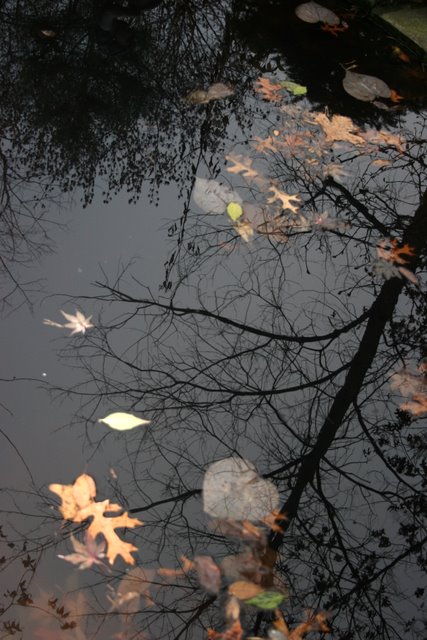
Tuesday, November 28, 2006
Dark Window
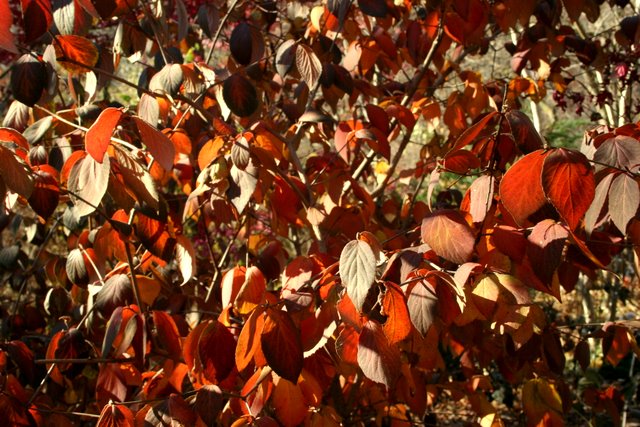 Viburnums are under-appreciated (i.e. ignored), as fall foliage shrubs. They are more subtle and moody than flashy... they remind me of a darkened, stained glass window in an ancient cathedral; not noticed until the sun hits it just right, then it lights up with rich, deep colors.
 Monday, November 27, 2006
If I Could Grow Ipheions...
Ipheions, or starflowers, are native to South America, yet fairly (meaning south of the Mason-Dixon line) hardy, but if you read the popular bulb catalogues, you can just pop them in the ground wherever you live, and stand back. I can't read any description of a blue flower without wanting it (yes, I tried a meconopsis once), so reading about the sky blue flowers of Ipheion Rolf Fiedler was too much for me, and two years ago I sprang for a half dozen bulbs. Well, I'm still waiting for the Wedgewood blue stars to grace my spring garden. I just went out and checked, and there were one or two little clumps of foliage (like many other hardy bulbs, it puts up its foliage in the fall), but I suspect Rolf Fiedler will continue to fade away. Well, now I was just scanning through a bulb forum, and someone in Ithaca, New York, which would be like Iowa with more snow, says that the Ipheions all do fine in their garden, except for Rolf Fiedler, which disappears without a trace. Specifically, they mention that another cultivar named Wisley Blue, has done well. It's too late this year (our temperature is to go from 66 degrees today with thunderstorms, to 13 degrees with snow in a couple of days), but I know what bulb I will be buying next fall. I would love to be able to write a really informative book on hardy bulbs in the upper midwest (of course, I'd also like to be six feet tall, but that's not going to happen, either).
At least this winter, while the snow blows down from the Yukon, I'll dream about someday having little sky blue stars gracing my garden... the cold winter gardener is ever optimistic.
At least this winter, while the snow blows down from the Yukon, I'll dream about someday having little sky blue stars gracing my garden... the cold winter gardener is ever optimistic.
Sunday, November 26, 2006
More Evergreen Epimediums
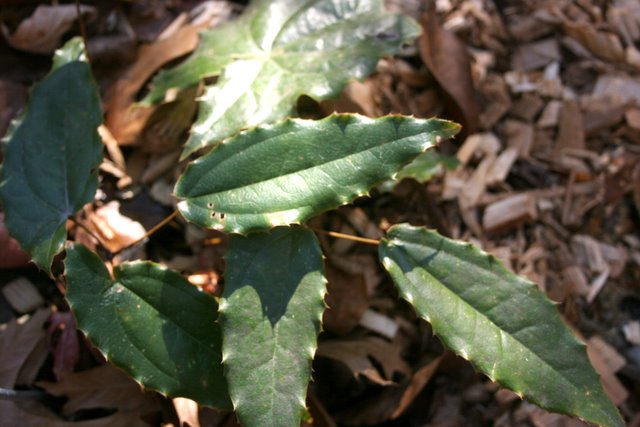 The evergreen epimediums in our garden continue to shine, with their varied and interesting foliage. Above is Epimedium latisepalum, one of the best epimediums, with very leathery, shiny fall foliage, with prickled edges. The flowers in spring are large and white. Below is Epimedium lishihchenii, which was only discovered in China a little over ten years ago. It is very hardy, with large white flowers in the spring.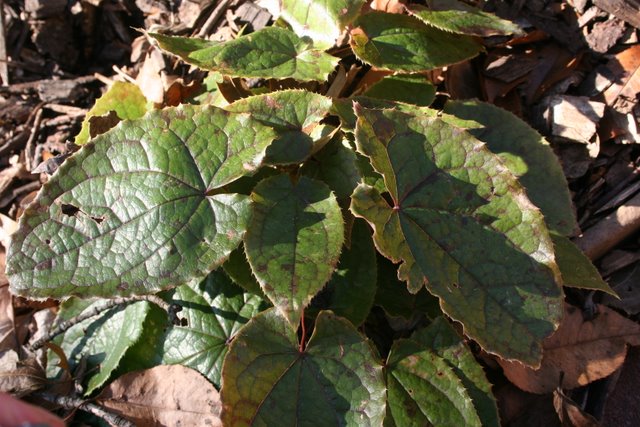
Saturday, November 25, 2006
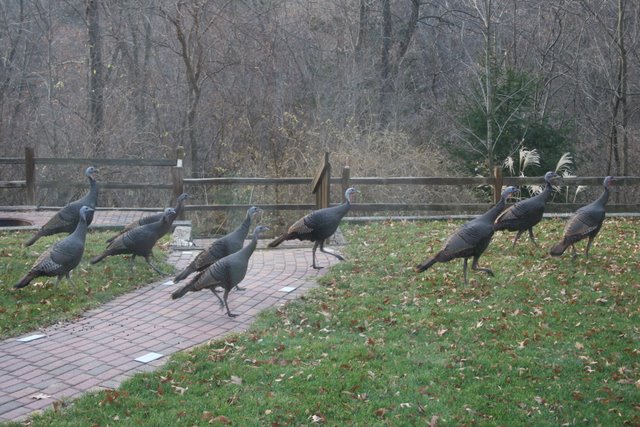
The Survivors
Friday, November 24, 2006
An Early Christmas
 In keeping with the holiday spirit, here are pictures of two different plants of Cyclamen coum that show the so-called "Christmas tree" pattern to their leaves, the green central patterning looking like a fir tree. This might be my favorite leaf pattern for hardy cyclamens, as it is so striking. In other gardens I have seen them with silver edging around the green center, and Ooh-la-la! Cyclamen lust is a dangerous condition.
Thursday, November 23, 2006
Thanksgiving
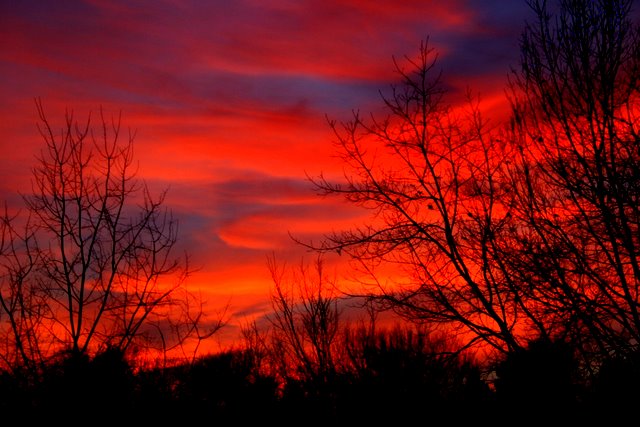 The birds grow quiet, as if to admire,
the sun sinking slowly, into a sea of fire.
A Warm Thanksgiving To all.
On The Edge
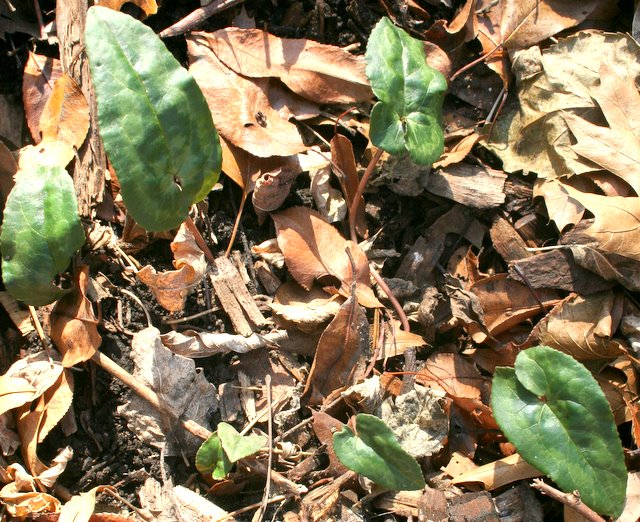
 There is a lot of variation in the leaves of hardy cyclamens; no two are exactly alike, and some of them are really out there on the edge in that they hardly even look like cyclamens. Above is one of the silver leafed hederifoliums, which look like they are little clouds floating above the dead leaves of autumn. Below is a Cyclamen coum that looks like... well, I don't know exactly what it looks like; perhaps seedlings of some type of melon? Last is a hederifolium with lanceolate leaves, looking rather more like a hardy ginger than a cyclamen.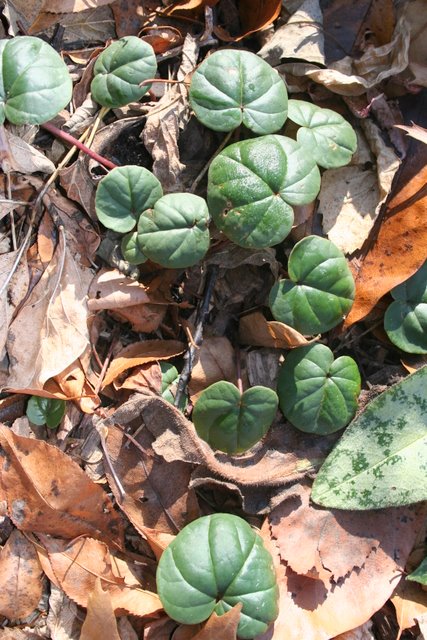
Wednesday, November 22, 2006
Beni Goromo
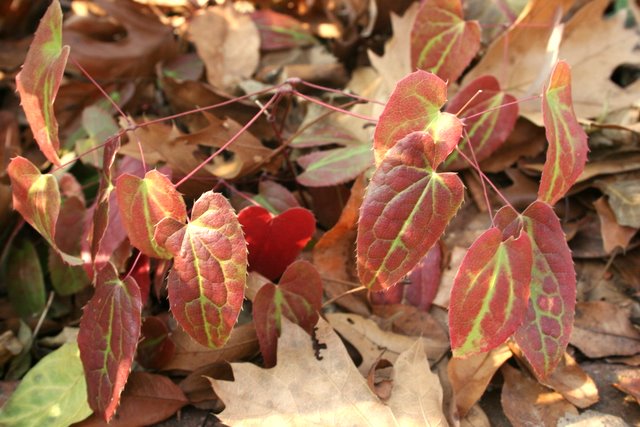 The evergreen epimediums, two of which were shown yesterday, are mainstays of our garden in late fall-early winter, with their deep green leaves sometimes taking on haunting burgundy tones. However, some of the deciduous epimediums are also still worth a look, with much brighter, harlequin colors: this is Beni Goromo, a Japanese hybrid, which has deep pink flowers in the spring.
 Tuesday, November 21, 2006
Epimediums: Two Easy "P's"
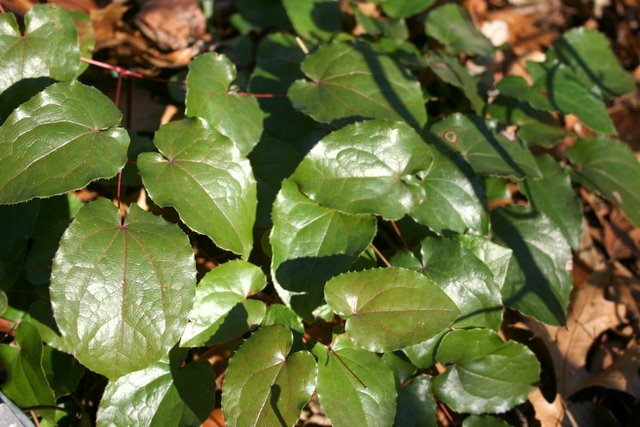 Evergreen epimediums in our garden in the late fall and even, with luck, in the early winter, are still quite attractive, with their shiny, waxy leaves which often become infused with mahogany tones. In milder winters, even as our valley becomes dark and empty on the cusp of Christmas, the evergreen epimediums are still carrying on. Here are two hardy, easy plants: Epimedium pubigerum, above, has leathery foliage with somewhat rounded leaves, and in the spring has creamy white flowers. Epimedium perralchicum, below, has bright yellow flowers in the spring.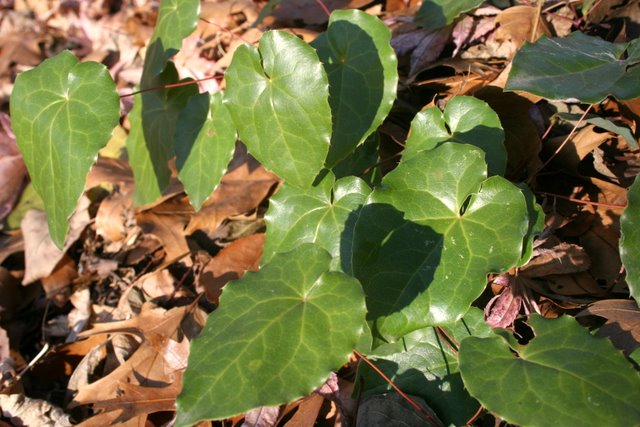
Monday, November 20, 2006
Strange Bedfellows
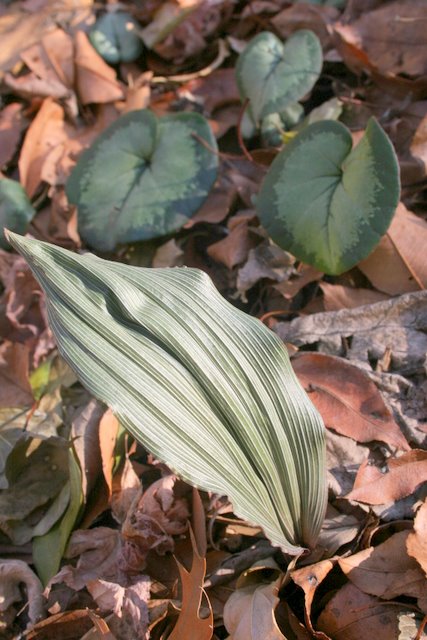 Our garden is rather a jumble of plants from all over the temperate world. Now that it's too late to do anything about it, I've had thoughts that I should have made at least an attempt to achieve some sense of botanical geography; it would have been nice to wander around the world so to speak, through the different sections of the garden. Alas, it's not to be, so sometimes odd combinations do occur; here's our native puttyroot orchid (Aplectrum hyemale), growing happily next to Cyclamen coum, from the Elburz Mountains of Iran.
 Sunday, November 19, 2006
Cyclamen Hederifolium "Bowles' Apollo" Group
 It would be an unusual garden to have a cyclamen as its show piece, especially when not in bloom; they are one of the most subtle plants in our garden. However, when I first saw the foliage of this particular cyclamen, I did go "wow"... not "Wow!", mind you, but at least "wow". This particular cyclamen was first discovered in the famous bulb garden of E.A. Bowles in England, and was said to be the showiest foliaged hederifolium in his extensive garden... he had collected bulbs and tubers from all over, and cyclamens were one of his passions. The plants available now are variable seedlings of this original plant, so are called "Bowles' Apollo" Group. My plant actually is a poor example of the group in terms of patterning and color (most are silver-leafed), but it still is striking in terms of the size and thickness of its leaves. It should be quite impressive when settled in. However, now I know I must seek out a silver Apollo.
Saturday, November 18, 2006
NOW What?
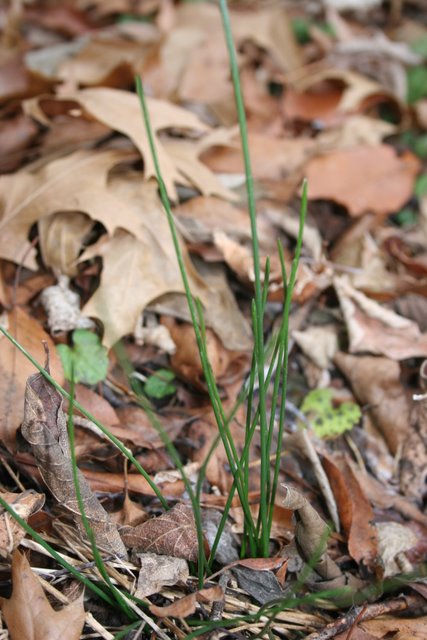 Gardening is always a crap shoot in Iowa, but when your given a little garden treasure from somebody else, it's doubly so. Brigitta of Arrowhead Alpines, sent me a gift of Narcissus fernandesii, a small species daffodil. Native to Spain and Portugal, it's a darling little yellow daffy with a strong scent. I planted it in a raised rock garden, where it would get good drainage, so after it died back in the summer I had high hopes it would return for me, which its done... but in November?? It's obviously multiplied nicely, looking like a little patch of long grass. Now, it's not unusual for daffodils to stick their green noses up above ground before spring, and usually no harm is done, but this daffodil is fully sprouted, with delicate-looking foliage. Do I dig it up and pot it for the greenhouse, or leave it be and hope for the best?
 Thursday, November 16, 2006
Patience Rewarded: The Ghost Emerges
 Patience is definitely an asset when it comes to planting ornamental trees in the garden. Some magnolias are glacially slow to flower, and Japanese maples can try the most patient gardener. I can also tell you that waiting for a birch tree to develop its white bark, when you start with a tiny sapling, is rather like going to a snail convention. Betula utilis jacquemontii, the Himalayan white birch, is a tree that makes garden writers get all mushy-prosed, rhapsodizing about this queen of birches, said to have the whitest bark of all. Greyswood Ghost is a particularly nice example of the Himalayan birch, and I obtained a small (small, as in "little brown stick-small") specimen of this birch a number of years ago, and planted it in a prominent spot by a garden path, and prepared to be dazzled by this snow-white beauty. However, after a couple of years it was still as brown as a June bug's back, and the tree got moved to a less prominent spot to await further developments. The bark, after quite a few years, did become rather attractive, if you like brown birch trees... it is shown above in January of this year. Then this fall, as if a stage curtain was being lifted, the brown bark peeled off and the tree stepped out in its new, pristine white finery. It was worth the wait:
Epimedium Yubae
 Epimedium grandiflorum 'Yubae' (which is also sold as 'Rose Queen'), though only 18" high, is one of those plants that seems to strive to be noticed: in spring (shown below) the foliage looks like it has been dipped in raspberry juice, with flowers of bright mauve purple. The plant fades to a pleasant green in summer, but even then its upright structure, and crisp foliage are attractive. Then in fall the foliage (shown above) takes on autumn colors of pink, yellow, and apple green. I have Yubae planted in a hosta bed, right by a path, and have light blue muscari planted in front of it; it gets a lot of comments for such a small plant.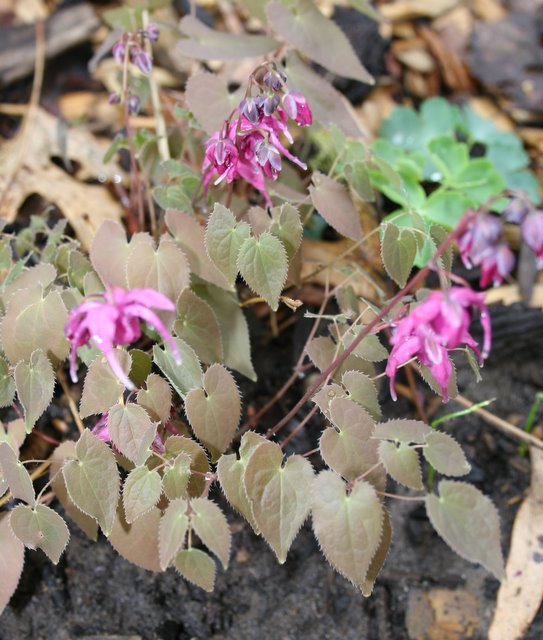
Wednesday, November 15, 2006
Epimedium Cherry Tart
 Epimedium x versicolor 'Cherry Tart' has leaves, that in the fall have accents that are... well, cherry red; they glow when the sun backlights them. The foliage has more of a reddish purple overlay in the spring, and as if that isn't enough red goodness, the flowers are a delicate pink with red spurs. The leaves stay on quite late in the fall, so this plant approaches that elusive four season plant even for us.
 Tuesday, November 14, 2006
The Winter Chasm
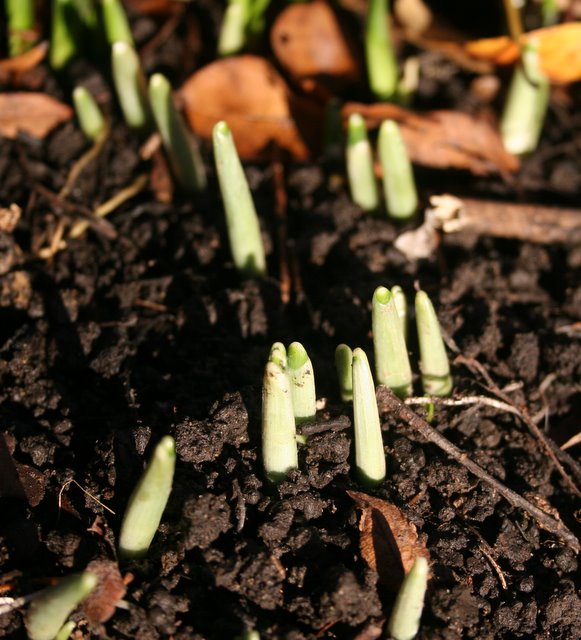 This time of year, between late fall and early winter (fwinter?), it's easy to get deluded into thinking that winter will be a snap in the garden, with spring just around the corner... lots of small plants like primroses are putting out new foliage under their protective blanket of fallen leaves, and the wet, black soil seems ready to explode, with thousands of small bulbs starting to push up into the sunlight. The early snowdrops (Galanthus elwesii), in particular, are well out of the ground, showing their diamond-hard white tips in row after row. The snowdrops will be blooming in February, and after all that's only three months from now; on occasion we even have them blooming in January. Yet it's an illusion... a delusion; for winter here is like a deep, cold chasm. You're walking towards it, whistling a happy tune, then you fall into this abyss of ice and gloom, which seems neverending. How three months can expand into this seemingly endless period of time is astonishing... had Einstein lived in Iowa, he would have, at a very young age, had no doubt that time is elastic, and can expand at will. Sleep tight, little snowdrops, and I'll see you in the spring.