Wednesday, January 31, 2007

A Cruel Winter
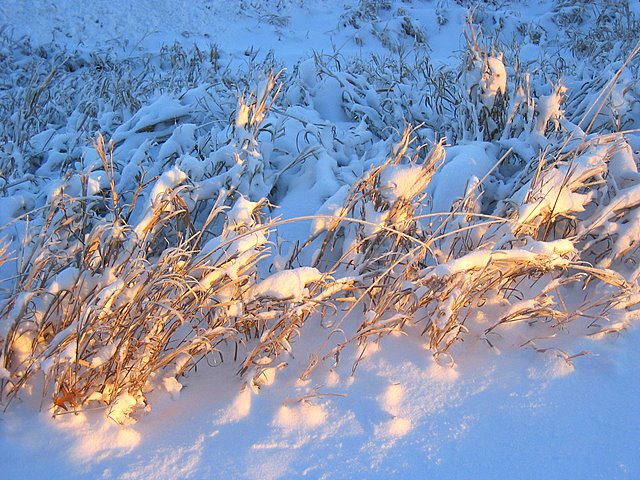
After several mild winters, this January is descending into ice and stinging cold, with temperatures to bottom out at ten below zero this weekend. The snow has frozen to a hard, irregular crust, making even walking in the woods difficult. The wildlife is suffering; the deer can't break through the ice to forage. The rabbits have become nigh invisible; besieged by hunger and the cold north wind snaking through the woods, and the constant watchfulness of hawks during the day and owls at night.
The coldest spell I've seen here in Iowa was one terrible winter where the temperature fell to minus 37. That storm came roaring in at night, with winds of 40-45 miles an hour, pushing the wind chill to a hundred below zero. I lived at that time in a thick woods of red cedars, and I went out that night for a walk. The storm boomed and howled in the tops of the trees; it was a clear night with a full moon, but wind driven ice crystals turned the sky milky, and the moon pale and wan. The next morning dawned clear, and as I drove to work, I noticed numerous black spots on the snow across many of the corn fields; they were dead birds, especially larger birds like crows. They had frozen to death during the night, their bodies strewn carelessly across the fields by the wind.
Weather here in Iowa is not just a backdrop for our lives; it is a palpable thing; it can be kind and forgiving, but not this year... it is a cruel winter. Posted by Picasa

Tuesday, January 30, 2007

Seneca Hills Perennials... A Throwback To The Past

This is a nursery fairly new to me, but I am absolutely charmed by it; it is rather like a throwback to when I first started gardening... at that time, many of the mail order nurseries were small outfits which reflected the owner's eclectic gardening interests (the business being an outgrowth usually of a garden which went off the deep end a little so the gardener thought that by selling a few spare divisions, they could buy even more plants). Ellen Hornig's Seneca Hills catalogue is both interesting in its plant descriptions, and absolutely idiosyncratic in its plant offerings, very obviously tracing the proprietor's evolving garden interests: what other catalogue showcases a wide selection of South African bulbs, antique irises, numerous species of peony, hardy cyclamens, arums, pineapple lilies, and sixteen different species of milkweed?
This is a catalogue to savor on cold winter evenings. http://www.senecahillperennials.com/Posted by Picasa

Monday, January 29, 2007

San Antonio Botanical Center
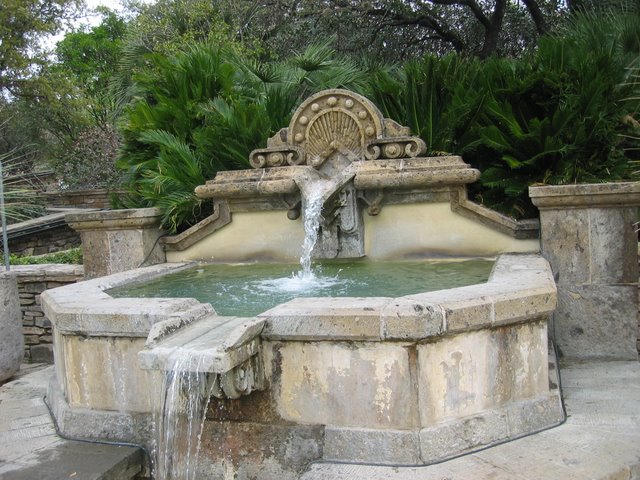
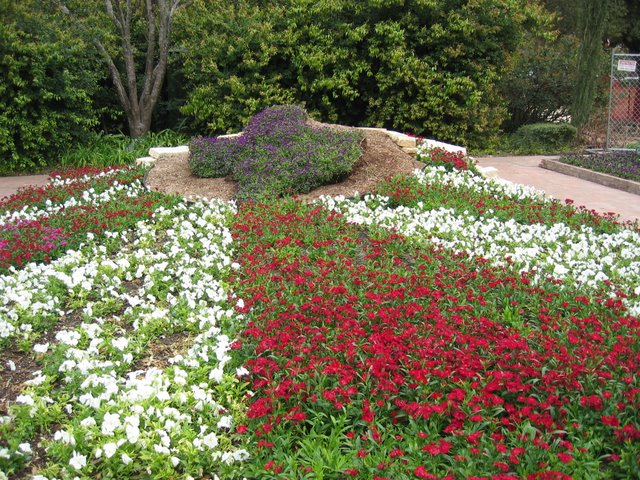
Another field trip we took this last year was to San Antonio; our main purpose was to escape the snow of late March in Iowa; of course we arrived in San Antonio on a day that set the all-time record for cold there for that date, with the temperature dropping that night below freezing... I was glad I took lots of shorts and t-shirts along for the trip. It did slowly warm up, and one day we toured the San Antonio Botanical Center. I'm a great one for taking off and walking everywhere, even in big cities (which has led to many adventures of widely varying merit), but I was glad I passed on hoofing it to the garden, as our cab driver, a colorful character, regaled us with stories about what he called Hooker Park that we would have had to walk through to get to the garden. The Botanical Garden itself is quite lovely, being built on the old waterworks, with an abandoned rock quarry being incorporated into it. The garden is stronger in landscaping than in individual unusual plants; there is great emphasis on xeriscaping, due to the dryness of the area. Posted by Picasa
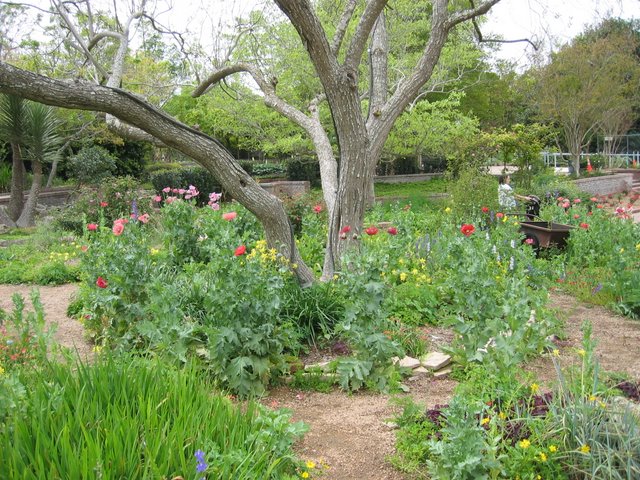


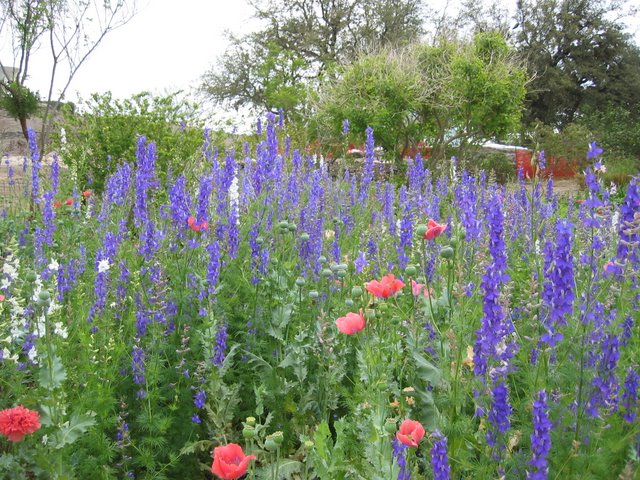
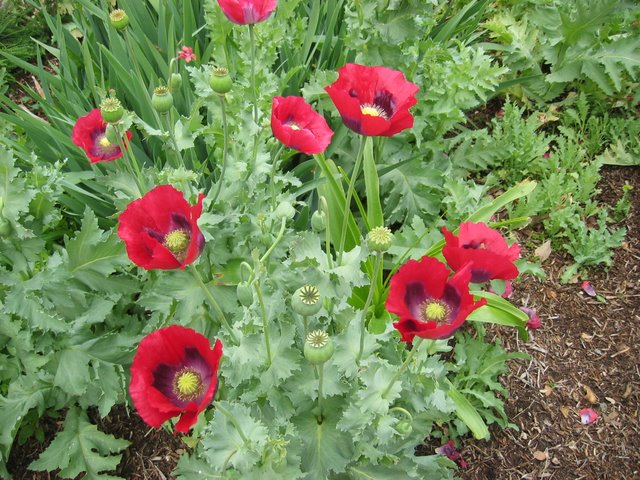
Bluebonnets and poppies were blooming everywhere, with hummingbirds buzzing through the flower beds, and mockingbirds singing endlessly in the trees overhead. Posted by Picasa


The Japanese garden was an exception to the emphasis on xeriscaping, and to me it looked out of place, and frankly a little ratty... the Japanese maples looked stressed even in early spring; sort of like giant bonsais. I can't imagine how tough it must have been to keep this area going this summer, with San Antonio's record heat and drought. Of course it's pretty funny for a gardener like me to get sniffy about people trying to grow things not really appropriate to their climate... Mr. Zonedenial! Posted by Picasa


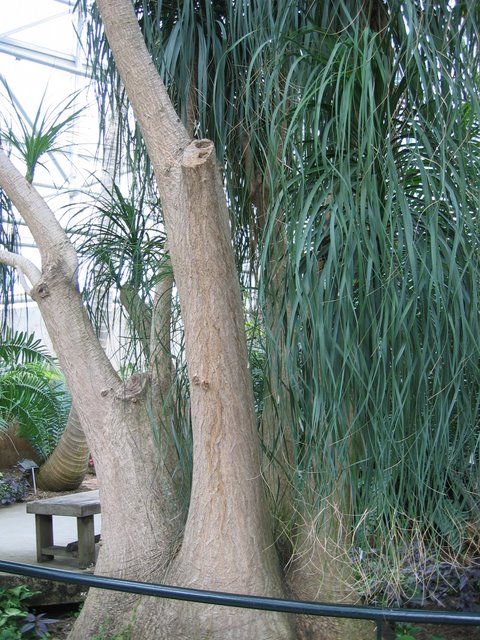
It was still pretty chilly on the day we toured the garden, so going into the glass palm house was welcomed; back outside, a photographer was doing a spring swim suit fashion shoot up by the pond, and the thin models parading around in their bikinis looked a bit, shall we say... nippy? Normally I'm all for watching something like this, but blue flesh is not that attractive. So, the palm house it was, and I finally understood the passion that tropical gardeners have about palm trees... the typical coconut palms of Hawaii were replaced by a fascinating variety of palms, with bark that ranged from fuzzy brown, to smooth green; all beautiful.Posted by Picasa
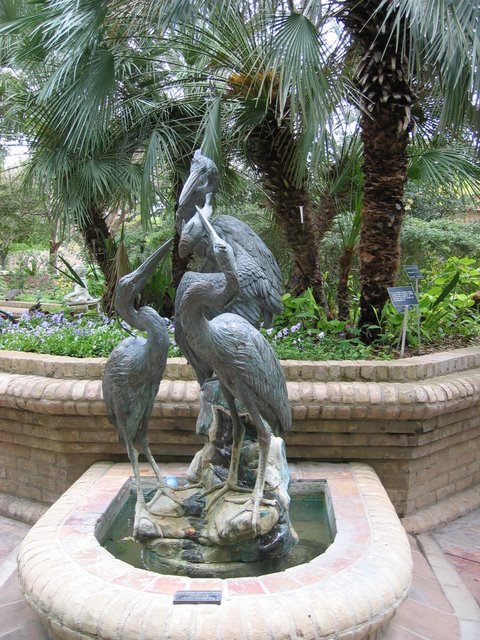


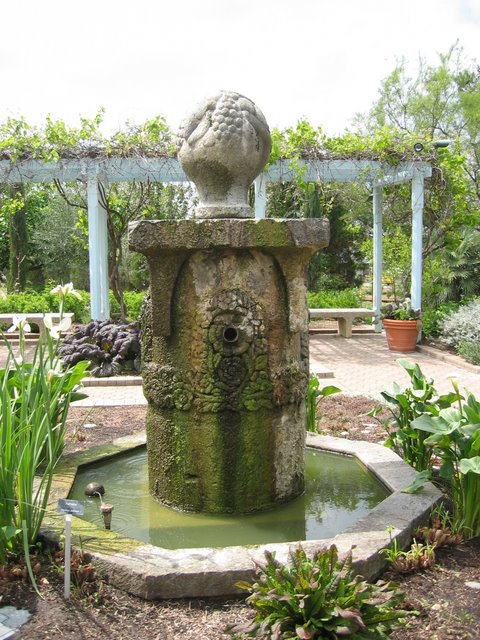
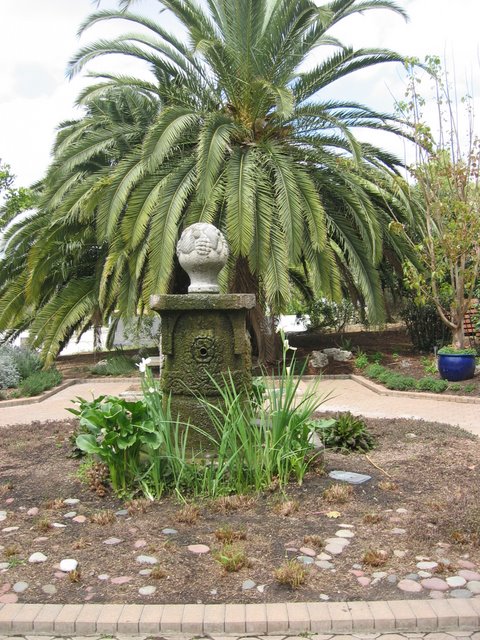
Most of the garden sculptures had that wondeful look of age and history, that you can't get out of a box. After walking all over the Botanical Garden, I was ready to get back to the Riverwalk for a maragarita and a taco platter!Posted by Picasa

Sunday, January 28, 2007

St. Louis By Day And Night


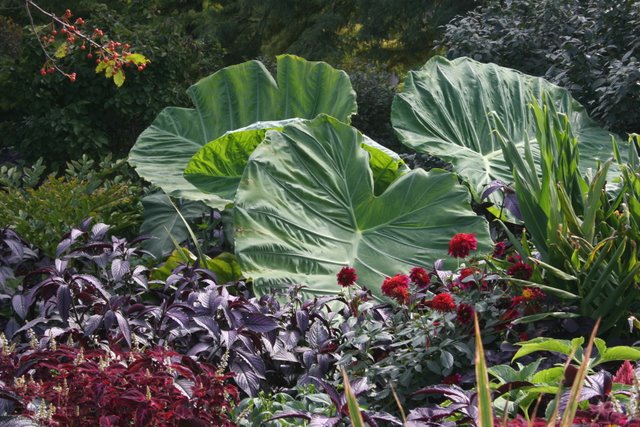
In addition to seeing the Chihuly glass at the Missouri Botanical Garden, we also walked around the gardens themselves; though it was October, lots of things were still in bloom, though signs of fall were everywhere, with the mums in full bloom, and bright mauve colchicums popping up, contrasting with the deep puples of the toad lilies. There are lots of other interesting things to see, including many garden sculptures, a few of which are shown here. That afternoon, we toured the St. Louis Zoo; the penguin house was my favorite... though I always wonder if penguins don't get tired of the smell of fish.
It was late at night when we finally got back to our motel room and got ready to go out for supper, but we were bent on going down by the riverfront to Laclede's Landing. Unfortunately it was easier said then done... mind you, we got very close to it. Our map showed that it would be a little tricky, but the reality was that on a dark night, it was VERY tricky; we kept coming to streets that were closed off, for inexplicable reasons. It finally looked like our best bet was to go to the north end of Laclede's, and take a right; as we rounded a curve, heavy traffic was merging from the left, and too late I saw that I should have taken a harder right... the next thing I knew we were on the bridge over the Mississippi to Illinois. Getting off on the first exit over the river, we drove north to the first place with lights so we could look at our map; it was a nightclub looking like the one in the movie Roadhouse. Unfortunately our map was just for St. Louis; in the bottom of the glove compartment was an ancient Illinois map that showed that it should be just as easy to keep going north and take the next bridge upriver back to St. Louis. However, when we got there the bridge had been closed; how many years it had been closed, I don't know, as we couldn't see anything in the murky dark, but the sign was all weathered and beaten up. There we were, in the middle of East St. Louis late at night, with no functional map, not having eaten for ten hours. I think Liz hates it when I'm cheerful under these circumstances. We then decided (actually I decided, as I think about that time Liz stopped talking to me), that we'd give up Laclede's Landing, keep going up to the next bridge, which was the interstate, and take a big loop back to our motel. We finally got back, two hours after we left, ordered a delivery pizza, and called it a night... another successful Bright Family tour. Posted by Picasa


 Posted by Picasa


 Posted by Picasa

Saturday, January 27, 2007

Chihuly In St. Louie


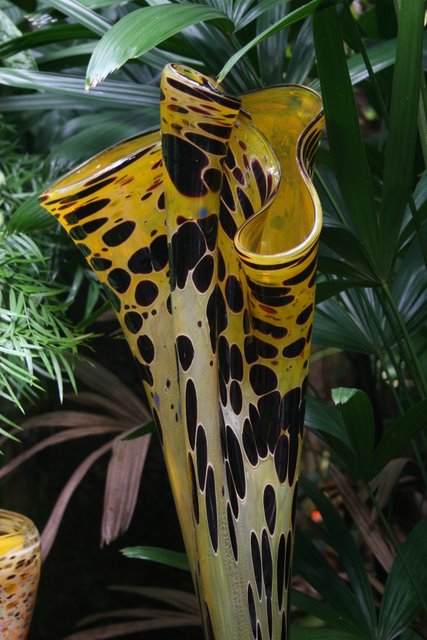
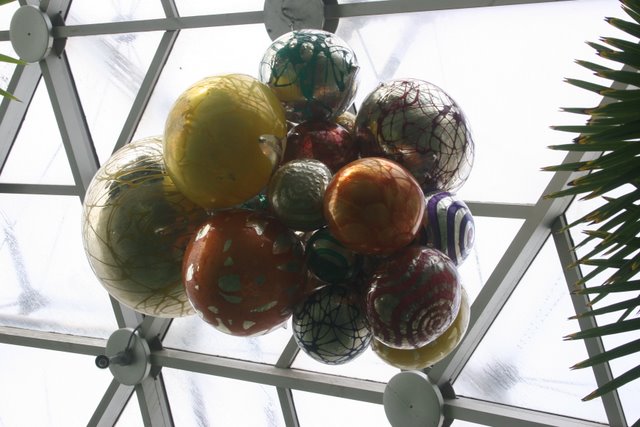
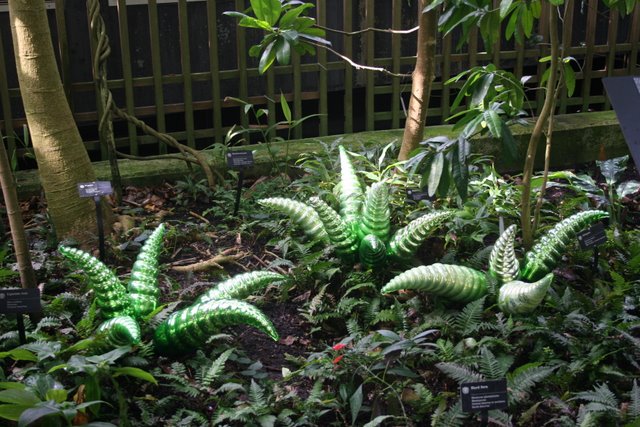
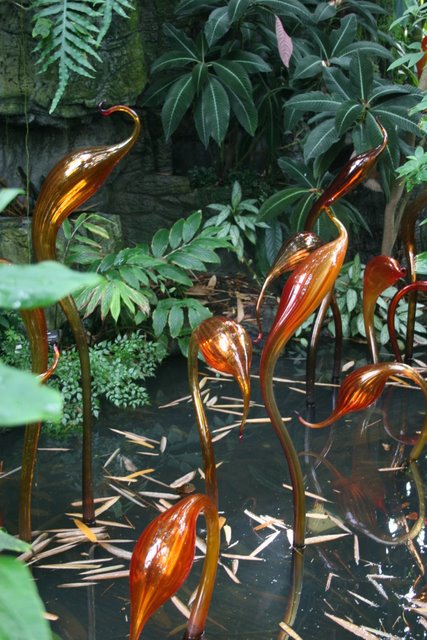
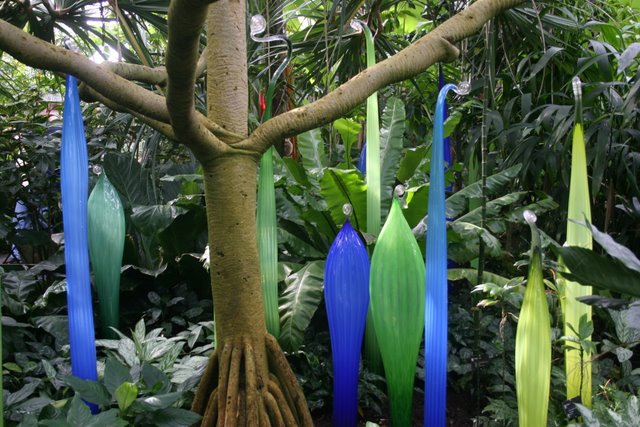
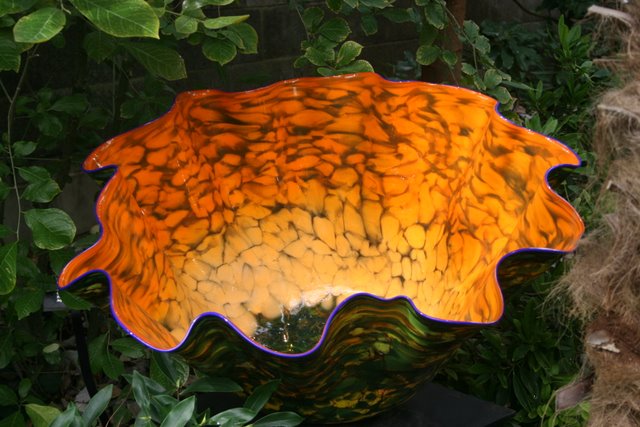
This last fall, Liz and I went to St. Louis to see the Chihuly glass exhibit at the Missouri Botanical Garden. Chihuly glass (from the studio of the same name) is of course world famous; the pieces might be called free-form glass sculptures. Most of them are large, very brightly colored, with swooping, intertwined and flowing glass that look like biological forms from another planet. Many of the exhibitions have been in public gardens, where the glass pieces are integrated into the foliage of the garden. At the Missouri Botanical Garden, most of the pieces (and these pictures) were from inside the glass climatron dome, while a few, as above, were outside. These pictures probably show 10% of the displays. If you ever have the chance to see one of these Chihuly exhibitions, by all means go... a few pictures cannot communicate how captivating this show really was. Tomorrow: more from the garden, and we inadvertently tour East St. Louis at night.Posted by Picasa


Posted by Picasa


 Posted by Picasa


 Posted by Picasa


 Posted by Picasa


 Posted by Picasa


 Posted by Picasa

Friday, January 26, 2007

Across The Wide Ocean

When ordering plants through the mail, I sometimes feel like we live across the wide ocean; it seems every nursery I order from out east, asks for extra shipping costs when you live west of the Mississippi River. Why this river is such a barrier to shipping, I don't know; Interstate 80 runs right across the river, and an hour later, you're at our doorstep... I've driven it without problems more times than I can count. Now, you'd think these extra costs would even out by ordering from the west coast, but most western nurseries don't carry a lot of stuff that will grow here, and for some odd reason, most west coast nurseries don't seem to charge more for shipping plants east of the Mississippi. I guess what really has me rankled, is a certain well known alpine nursery in Michigan, (very) recently reviewed here, adds a 10% surcharge for shipping west of the Mississippi... from MICHIGAN! The last time I checked, Michigan was still considered in the midwest. Florida is three times further from them than me, but I have to pay 10% more in shipping. I've always considered myself to be an ecologist, but if they dammed up that river, I'd save a lot in shipping costs. Posted by Picasa

Thursday, January 25, 2007

The Shoals Of January... Arrowhead Alpines


Winter in Iowa can be a perilous time; patches of black ice can send your car spinning like a top; the young blonde waitress with a winter cold sneezes on your salad; last night a deer blasted across the road so closely in front of my car that I could hear his hoofs squeaking in the packed snow... however, these dangers all pale in contrast to the arrival of the Arrowhead Alpines catalogue. It innocently shows up in the mailbox every January; filled with page after page of small printed text, with no pictures save the covers; it would seem innocent enough... but it is the shoals of January... the site of the annual shipwreck of my garden budget. The owners, Bob and Brigitta, seem bent on accumulating every variation of every species that they can... I think Bob is really one of those mad, pack rat plant accumulators, who just sells a few plants to support his mania. At any rate, it is not a catalogue for everyone; there are, as I said, no pictures, there are no hardiness ratings... you are on your own in wandering about in this catalogue, but I wouldn't want it any other way... what other catalogue in this country would have sixty different kinds of campanulas? Enter this catalogue at your own risk! Posted by Picasa

Wednesday, January 24, 2007

A Wee Catalogue

I've just received Temple Nursery's catalogue for the first time... a wee catalogue, befitting a wee plant: the snowdrop. It's a mere five pages long, but since we're talking snowdrops here, with 99% of catalogues in this country listing at most the two common species, elwesii and nivalis, this is pretty impressive. There about forty varieties listed in Mr. Lyman's small, charming catalogue, with no pictures inside, but nice descriptions. The bulbs are shipped "in green", so shipping costs are pricey for such tiny bulbs ($18 flat fee), but worth it, considering the high failure rate with dried bulbs. While the prices for some of the bulbs listed can range up to $50, there are some for $5, which is enough to entice me. One good thing: the most crowded garden always has room for a couple more snowdrops; so, my garden is big enough... my checking account is a different matter.Posted by Picasa

Tuesday, January 23, 2007

Why They Are Called Snowdrops

The snow that yesterday in flakes
Still dropped from heaven
Today now hangs congealed like bells
On the fragile stem.

The snowdrop rings: What does it portend
In the quiet grove?
O come quickly. In the grove it rings
The springtime is in.

Ruckert

(Picture of Galanthus elwesii, taken earliest March, last spring just as they opened.) Posted by Picasa

Monday, January 22, 2007

The Carolina Wren

Even on these snow-bound days of deep winter, if the sun comes out and lights up the ravines, the Carolina wren comes out to sing; a cheery counterpoint to the cold and ice of late January. It is only the last five years or so that our woods has been a consistent home for these birds; native to the south, we are just at the northwestern fringe of their territory, and in severe winters, they die off. With our recent milder winters, we are now regular beneficiaries of their singing prowess. They are slightly larger than our Jenny wrens, and of a richer brown, with a longer, down-turned bill, and a more prominent white supercilium (line above the eye). The Carolina wren's ringing call of tea-kettle, tea-kettle, tea-kettle, is now heard almost year around; I don't know if they are just preternaturally cheerful or if they are deluded; southerners transplanted to the north, who can't get out of their heads the idea that a sunny day in January means a happy trip to the beach.Posted by Picasa

Sunday, January 21, 2007

Snowdrop Obsession

Snowdrops, perhaps the most modest of early spring flowers, are a focus of infatuation that is inexplicable on the surface of it; they are small, basically white flowers, with all of the species looking far more alike than just about any other genus you could think of. Specimens with a small variation in the little green blotches on the inner petals can (and do) sell for over a hundred dollars each... if you can find them to buy. I say all of this not in disparagement, but rather in sheepishness, for I am not totally immune to this mania; I have a dozen kinds of snowdrops, and I would gladly take you about, and point out the minute differences that make each one a treasure. However, I am small potatoes in the ranks of galanthophiles; I would not pay more than $15 for a snowdrop bulb (maybe $20 if the little green blotches were particularly nice). If you want to meet a real galanthophile, Mark Smyth in northern Ireland has a snowdrop garden that contains something near 250 varieties (he's currently modifying his list; I doubt that means it's being pared). He has a website which has to be the most beautiful site devoted to snowdrops:http://www.snowdropinfo.com/

(Picture above is of a double snowdrop, Galanthus nivalis flore pleno, taken last March.)Posted by Picasa

Saturday, January 20, 2007

Talkin' About Bulbs

There is lots of information out there about flower bulbs, but when you put in a search about a particular species, especially if it's an uncommon one, many of the entries are rather repetitive, and you wonder if the author has ever actually grown the bulb in question. That's when I like to turn to bulb forums (message boards); you are reading comments of people who are actually growing (or failing to grow) the bulb you're interested in, and often you can find entries from folks roughly in your climate zone. Also, while looking for information about a particular topic, I always run across discussions about other plants that carry me off in other directions. There are lots of different well-known forums, but here are several out of the way sites that are very interesting, that you may not have run across:
First, the Pacific Bulb Society Forum; while this covers mainly bulbs I can only dream about growing outside (it's heavy in South African species), it's still fun to read. http://lists.ibiblio.org/pipermail/pbs/
Second, the electronic garden sites (Listserv); there is a specific site for the Great Lakes Bulb Society, at the website https://listserv.surfnet.nl/archives/bulbs-l.html
However, I think the general Listserv alpine site is much more active, and often therefore has more bulb information https://listserv.surfnet.nl/archives/alpine-l.html
The last (and best) site is that of the Scottish Rock Garden Club; their forum is filled with fanatical gardeners, who love sharing their gardens. The website has other interesting features, like articles, and reports from gardening shows with wonderful pictures; it's just wonderful place to visit http://www.srgc.org.uk/index.htmlPosted by Picasa

Friday, January 19, 2007

Pristine Snow

When snow falls in the midwest, it forms a pristine palette for nature to leave its calling card. In the case of our backyard, it doesn't stay pristine very long; this picture was taken two days after the last snow; it's mostly deer tracks, but I see mixed in, rabbits, squirrels, raccoons, birds, what may be a fox, and domesticus pussycatticus. I have always believed in sharing with nature, but around here you better get your piece of pie and run. Posted by Picasa

Thursday, January 18, 2007

Pride Goeth Before The Fall... Rare Snowdrops In My Garden

In the fall of 2005, I obtained a handful of bulbs of a species of snowdrop new to our garden; Galanthus ikariae. It was new to the garden, but not new to me, as I had read about it in Dicky Graff's classic book Flowers in the Winter Garden. In her garden it "made one gallant attempt to show what it could do in a congenial climate...neither flowers nor foliage proved tough enough to stand a succession of hard freezes." Mind you her congenial climate was zone 7 Long Island as opposed to the graveyard of horticultural expectations in zone 5a that I call home. I therefore didn't hold out much hope for it here, especially when it started pushing out its shiny green foliage during a brief mild spell last January. It did survive though, and bloomed lustily as shown above. I entered a rather modest piece on it on this blog (though I might have used the phrase "While some well-known gardeners have not had success growing it, it threatens to become a weed here." I did vaguely know that there seems to be some confusion in differentiating out some of the species of galanthus, and that some seem to lump ikariae with woronowii, and perhaps even latifolius. I was just noodling around on the web site of the Scotttish Rock Garden Club, and there was an extensive discussion of galanthus, with beautiful, clear pictures. One author stated unequivocally that ikariae is a very distinct species from woronowii; the foliage is alike, but the markings on the flowers are quite different, and he said that almost all of the bulbs sold in commerce as ikariae are in fact the much more common and pedestrian woronowii. The green blotch on the inner petals of woronowii is small, usually somewhat heart shaped, and there is a prominent notch in the petals at their apex, at the middle of the green blotch...in otherwords, just like my supposed rare, ever-so-tender ikariae. Woronowii is probably much hardier (coming as it does from southern Russia and northern Turkey, rather than from the hot Aegeaen Islands like ikariae... woronowii, in fact has made itself at home and naturalised in Great Britain). The green blotch on the tube, or inner petals of ikariae is much larger and squarish; it sort of looks like a molar tooth broken off half way down the roots.
So, my prize snowdrop, a bulb that the legendary Dicky Graff couldn't grow on Long Island, turns out to be a common little seed-about, probably dug up from a ditch somewhere in Great Britain. Dicky probably couldn't grow Big Boy tomatoes worth a hoot, though. Posted by Picasa

Wednesday, January 17, 2007

Take Me To Your Leda

Writing garden humor is deceptively difficult (this blog being proof of that)! I was therefore immediately intrigued when participants in an internet garden writing forum that I was reading started discussing a gal (Elizabeth Churchill), who used to write gardening columns for Regan Nursery, a rose nursery in California; a couple of forum members raved about her sharp wit. I looked up the Regan Nursery website, and there they were: almost five years of garden columns, under the name Dr.Leda, with some of the articles written in a fairly straight style, and some wildly outlandish. If you like garden humor, they are well worth looking up: http://www.regannursery.com/news/archive/index.htm. Unfortunately, they ended last spring, with a notice on the website that Dr. Leda was no longer around and no longer writing her columns. From her articles on the website it was apparent that she had moved from Berkeley to a small town in Louisiana; it turns out that she then developed an aggressive lymphoma in her chest, and is currently undergoing chemotherapy; she now has a blog, detailing her fight to cope with her illness and her treatment: http://www.spinningtumor.blogspot.com/
Her quixotic, feisty wit still comes through, and I hope she prevails, and is able to return to garden writing; a series of garden books written like Henry Mitchell with an attitude would be a welcome addition to my library.Posted by Picasa

Tuesday, January 16, 2007

The Moor Garden

Every garden, of course, changes constantly during the year and each phase can be interesting, if not captivating. Myself, I'm not a big fan of today's phase, with 4 inches of new snow on the ground and a temperature predicted to top out in the teens; shuffling along the garden paths looking at ice crystal patterns on tree trunks to see if they look like animals or former President's faces has never been my thing. Give me very early spring, when the early lepidote rhododendrons and magnolias are just opening up, before the leaves on the trees and shrubs really get going. This is a brief time; perhaps a week long, usually in early April... the ground is still pretty bare, dark and cold; the sun is still fairly low in the sky, so it slants into our valley, with the air being misty and cool. With few leaves out on the trees, you can see all across the garden, where the bright, glowing flowers of the magnolias and rhododendrons, all in whites, mauves, and cerise pink, stand out dramatically, and draw you to them. It's as if you are walking across a damp, cool moor in England. A few days later, with a couple of warming days, the whole garden explodes in the lushness of spring, and these early, bright flowers are tempered by many different shades of green foliage. Posted by Picasa

Monday, January 15, 2007

I Get Mail...

In addition to reader's comments made on this blog (which, like all bloggers, I lap up like a kitten with a bowl of milk) I get quite a number of blog e-mails; most of them are also eagerly looked at. A few though are opened gingerly, like being poked with a stick, and a few are tossed unopened in the trash, like they were radioactive.
As the snow drifts past the window in big, fluffy flakes, I note some recent e-mails received. One outlines breathlessly how, for a fee, I can convert my blog to view by subscription only, and get rich so I can retire. Well, I'm already retired, thank you very much, and while I relish the thought of checks rolling in every day I've always maintained that wading through my blog, especially in the middle of winter when nothing is happening, is probably quite enough of a price for readers to pay. Besides, checks for 13 cents are probably not going to do much for my lifestyle. In contrast with my first e-mail, a very interesting and informative message about azaleas arrives from Bill, who has a website well worth consulting http://www.theazaleaworks.com/ . Finally, a person calling himself Captain Dave warns me that I may be on spiritual thin ice by having a life-sized devilish gargoyle in the garden. Fortunately I've not posted pictures on the blog of the garden plaques showing cherubs in various states of undress cavorting about, or I'd probably be thrown in the pit.Posted by Picasa

Sunday, January 14, 2007

Azalea Rosy Lights... A Rose Red Azalea


If you like a bright rosy red azalea, the Northern Light's azalea 'Rosy Lights' is very rewarding. It's a hybrid of a hardy Mollis and our native, very hardy prinophyllum; perhaps four feet tall, and covered by dark neon pink flowers. I've been meaning to plant a cluster of these offset by a brilliant white azalea... maybe this spring. A couple of Rosy Lights are shown here in mixed azalea beds. Posted by Picasa

Saturday, January 13, 2007

Azalea Mt. St. Helens... A Sometimes Red Azalea

Azalea Mt. St. Helens is my candidate for the single most beautiful deciduous azalea, and perhaps the most variable. It is basically a pink with a golden blotch, but the flowers vary dramatically from plant to plant, year to year, and even from the beginning to the end of the flowering season. I add it to my list of beautiful red azaleas (a light rose red or deep rose pink, actually), but it is a sometime red. The beautiful part is a constant, though. If you have the proper climate, and only room for one deciduous azalea, let me suggest Mt. St. Helens; you'll never tire of it. Posted by Picasa

Friday, January 12, 2007

Odd... Very Odd

Our silly little charade of spring in January has ended as it always does; with a huge slab of sub-zero air sliding down from the North Pole. It's odd though; usually when there is a rapid, massive temperature change like this, there are strong winds accompanying it. In this case, the cold air just appeared at the door, as it were; this morning I was down to the pond, and it was still sparkling and ice-free. In a matter of hours it has frozen up, as the temperature dropped another 14 degrees, with no wind to speak of... very odd. On the bright side, we aren't St. Louis; they are just about to enter a huge ice storm, with up to an inch of ice, then continuing freezing rain off and on for the next two days. St. Louis has been through weather hell this year; a severe summer storm with tornadoes and then a severe winter storm both had hundreds of thousands of people without power for up to weeks on end, and now this. My wife's elderly uncle had just gotten back in his house after being evacuated due to no electricity for a couple of weeks from the last storm... I think he'd better keep his bags packed. Posted by Picasa

Azalea Mollis... Grandaddy Red

Azalea mollis, as purchased in a nursery in this country, is certainly not a pure species, but rather a mix of seedlings from various old crosses of the Japanese and Chinese azaleas. They do have in common soft, silky colors in the yellow-orange-red spectrum. The reds typically, as shown here, tend to be soft orange-red. Our native flame azalea was added to this mix to make our modern Knap Hill-Exbury azaleas, with their brighter, sharper colors. These old mollis plants have a real charm though... I have several, from yellow to this red one, planted along both sides of a slightly sunny section of woodland trail that winds uphill and around a bend. These striking azaleas draw you up the trail to see what's awaiting you around the corner. Posted by Picasa

Thursday, January 11, 2007

Mole Deterrent

A GERMAN pensioner who wired up a high-voltage cable to try to wipe out the moles digging up his garden killed himself instead.
Uwe Werner, police spokesman in Stralsund north of Berlin, said the 63-year-old retired construction foreman was found dead in the garden of his weekend house in Zingst next to a 380-volt cable and metal spikes rammed into the ground.
"The moles survived," Mr Werner said, noting the voltage was enough to run a cement mixer or heavy-duty power saw. "It was in any event an unorthodox method to try to get rid of moles."

Azalea Salmon Delight... On The Pink Side Of Red

Azalea Salmon Delight (a cross between Exbury azaleas Klondyke and Pink Delight) is an unusual shade of pinkish red; as they say, it has full, ball-shaped flower trusses, and is just loaded with flowers in May. I have this planted at the top of a slope, and when it's in bloom I can see it from clear across the garden. Posted by Picasa

Wednesday, January 10, 2007

The Siberian Dagger

Today was in the 40's here, and sunny, but the wind is gusting stronger and stronger; Siberia is coming, or at least it's cold air. A large dome of frigid sub-zero cold that has been building over Siberia, on the other side of the world, is following the jet stream up over the north pole and down through the heartland, like a Siberian dagger. The amount of snow we will get is still uncertain at this point; we are to start with rain tomorrow evening, then freezing rain and sleet. Snow predictions for the weekend seem to be trending upwards; it may just be flurries, but some are now saying we'll get as much as 6 inches. What is certain, is that temperatures will plummet to below zero by early next week. So, let us speak no more for now of blooming snowdrops, and budding hellebores. It is a time to lay in a supply of Bud Light and Cheetos; it is a time to leaf through the newly arrived garden catalogues; it is winter in Iowa. Posted by Picasa

Azalea 'Prominent'... An Older Red

We continue our look at red azaleas, with Azalea 'Prominent'. It is an older hybrid, with smaller flowers, but they make up for their size by their bright color; electric red with gold highlights, and a slight gold blotch. It is a so called Mollis hybrid; these were some of the earliest azalea hybrids ('Prominent' is one of the later crosses of this group). The Mollis hybrids are derived from various combinations of the Chinese azalea and the Japanese azalea, with the North American species viscosum (the swamp azalea) mixed in when it later became available to the hybridizers, who were originally primarily in the low countries of Europe, beginning in the late 19th century. The Mollis hybrids are getting harder to find in mainstream horticulture; those that are being preserved are probably surviving mostly by being passed from gardener to gardener as heirlooms. However, the well-known Northern Lights series from Minnesota is derived mainly from crosses of a particularly hardy Mollis azalea with our native prinophyllum (roseshell azalea).Posted by Picasa

Monday, January 08, 2007

Azalea Ilam Red Frills

Ilam Red frills is another azalea on the orange side of red, and it's aptly named, with fabulous ruffled edges. Ilam was an old plantation in Christchurch, New Zealand; the original Ilam azaleas were actually crosses made of the deciduous azaleas at Exbury in England, and the seeds were sent to Ilam, where they were planted and the best of these plants were eventually released commercially; they are known for their large flowers and bright, flame colors. Ilam is now the site of Canterbury University, but the Ilam Botanical Gardens on the campus continue to be famous for their azaleas. Hybridizing continues there, with re-selection leading to the new Ilam Galaxy series; I have not yet laid my hands on any these newer hybrids, but I'm on the lookout. Posted by Picasa

Sunday, January 07, 2007

Hamamelis Vernalis Autumn Embers

Actually, while I've tooted my garden horn about having snowdrops blooming in early January (a couple more have opened since yesterday), they are not the first thing to bloom; Hamamelis vernalis Autumn Embers has been blooming since right after Christmas. This shrub, the vernal (spring) witch hazel, is quite large when mature, and this particular cultivar was selected for its fall foliage color, which is deep burgundy with a glowing heart of fire. Its spring flowers to me are almost incongruous, as they are also autumn colors; orange and gold, and rather small. In normal winters, it blooms here in late February, if there are a few warmish, sunny days. Garden writers are always talking about stretching the garden season by planting more fall-blooming plants. Myself, I'll take plants that stretch to early spring or late winter. There's nothing like going out and whacking off a few branches of witch hazel flowers to bring inside on New Year's Eve. Posted by Picasa

Saturday, January 06, 2007

First Snowdrop


I was out nosing about the garden on a bright, sunny day; the birds have it in their heads that it must be spring, and two male red-bellied woodpeckers were having at it, in an early territorial spat. I ran back in for the camera, but the loser was already gone by the time I got back out there; woodpecker dustups never seem to last very long. Anyway, although feathers were flying, it's hard to take woodpecker fights very seriously; it's like watching Woody Woodpecker scooting up and down the trees. Since I had the camera, I decided to check out the snowdrops; with our warm winter they've been growing steadily, and being afraid that sooner or later we must be in line for some seriously cold weather, I earlier decided to throw piles of leaves on them, hoping to keep them from getting too frisky; sort of like yelling upstairs, "You kids get to sleep, or there's going to be trouble!" It's only been partially succesful, as one is already blooming; my first snowdrop of the year. As shown a while back, I actually had a snowdrop blooming around Thanksgiving, but I couldn't decide if that was the last snowdrop of last year, or the first snowdrop of this year; we're not used to this four season gardening stuff. It looks like, if we don't get too wintery, that there will be lots more snowdrops blooming quite soon; scores of them are in full bud. These of course are Galanthus elwesii, the early or great snowdrop, with lovely grayish-green foliage. So, for better or worse, considering that it's barely past New Year's, and cold, snowy weather is forecast for late next week, the gardening year begins. Posted by Picasa

Was It Something I Said?

 Posted by Picasa

Friday, January 05, 2007

A List Of MyTwelve Favorite Nurseries, And How It Shrank

Alright, after requests from many readers (well, actually I think it's just Kathy, but she's been nagging me about it for a while), here are my favorite mailorder nurseries... keep in mind that my main interest is shade-tolerant plants. This list just a year ago would have had twelve names, but Roslyn Nursery closed, I just now found out that Collector's Nursery in Washington is temporarily closing, then downsizing, and Heronswood... well, you know what happened to it.

1. Arrowhead Alpines-- Bob and Brigitta in Michigan put out a catalogue that's all small-print; no pictures, no hardiness listings, no dumb questions answered, but a plantaholic's paradise.

2. Asiatica Nursery--kind of small plants, kind of high prices, but temperate Asiatic plants you'll have a hard time finding anywhere else; awesome asarum (ginger) selection.

3. Naylor Creek-- very nice hosta selection, and probably the largest selection of epimediums anywhere in the country.

4. Plant Delights-- fun to read, great pictures, and some very odd plants.

5. Seneca Hills Perennials-- a newcomer to my list this last year; if you want cyclamens that take right off in your garden, this is the place.

6. RareFind Nursery-- also a newcomer; great selection of rhododendrons, nice folks.

7. Song Sparrow Nursery-- I guess this is the old Klehm's; I like them because their shrubs and trees are packed the best of any nursery I've ever ordered from; Japanese maples look like they've been in the box for ten minutes, when you unpack them.

8. Beaver Creek Greenhouses-- amazingly low prices (like $5-$6) for things like primroses, and a wealth of other interesting perennials.

9. Evermay Nursery-- a small outfit in Maine, much like Beaver Creek; their list makes me wish I lived in a cool-summer climate.

9A. Lazy S'S Farm Nursery-- I just had to add this company, as they have a really interesting selection of plants at reasonable prices, and are always adding something new. Posted by Picasa

A Seedy Excuse

Well, Kathy of Cold Climate Gardening has tagged me with a meme about purchasing seeds. I was game, but as I read down the list of questions, I started to feel like I was filling out one of those questionnaires; does not apply-does not apply-does not apply. For you see, I have a seed box of shame, which I just dragged out of the bottom of the back closet; stacks and stacks of flower seed packets of all sorts, purchased over the years, and still pristine in their unopened envelopes. If you look closely at the picture of poppy seeds, you'll see it's from 1999, which is about when I gave up the illusion (delusion) that each winter I was going to sow row after row of little pots of flowers, so I gave up buying seeds. I have, of course, a long list of excuses, at least a few of which I could relate with a straight face, but I'll not bore you with them. It is kind of interesting though, looking through the packets and seeing what I used to think I wanted to grow; what the heck is Cliastrus formosus, the desert dragon, and why would anyone want to grow it?Posted by Picasa

Wednesday, January 03, 2007

On The Other Side Of Red

A few days ago, I showed azalea Arneson's Ruby, which is slightly on the bluish end of red. This is Hotspur Red, which is slightly on the orange side of red, with a small orange blotch, and a slight orange hue to the pistil and stamens. It is a Knaphill azalea, widely known and widely grown, so it can often be picked up cheaply at box stores; it's shown below mixed in with other azaleas (it's in the lower left in the picture). Posted by Picasa

 Posted by Picasa

Yea Or Nea?

As regular readers know, our house and garden, while they are in the middle of suburbia, are pleasingly isolated; when the leaves are on the trees, we cannot see any of our neighbors and they are spared having to watch our goings on. In the winter months, we find out that there are, in fact, other people out there. I was talking a while back to our nearest neighbor, an older gal ( the one who lives across the pond-at the top of the hill-through the trees), and she commented that now that the leaves were off, she could occasionally catch a glimpse of me out working in the garden. I told her she might not want to look too closely, because I was used to being by myself out there and, since it's a long way back to the house, I've been known to occasionally pee against a tree. On hearing that, she smiled and said that she might have to invest in a bigger pair of binoculars... now, I've been trying to work out if that is a compliment or not?