Monday, January 30, 2006
Lost Blogs
Blogs anymore are like grains of sand; almost infinite in number, mostly indistinguishable, washed up by the great internet sea today, and gone tomorrow, not even to be forgotten, as they were seldom noticed in the first place... but then there was Anne. Right after I started my modest blog, like any new tenant, I decided to check out the neighbors. I soon stumbled on a tiny gardening blog from near Des Moines in central Iowa, called Tender Dirt. It only contained about twenty short entries, and covered only three months at the end of 2004. It's author, Anne, was a young woman with a husband and child, and she was pregnant with their second child. She was a writer, and in the past had taught, and it was apparent that at present the family was financially hurting. From comments in her blog, and just from her perspective on her environment, it was clear that she was raised in the prairie states, in this case in the Flint Hill country of eastern Kansas... and how that girl could write! I've always been a sucker for female vulnerability, which she unconsciously radiated, and her writing style both captivated me and made me jealous of her talent as she threw off striking phrases and images as casually as I might rustle a newspaper... and now she's gone. Her first postings were more or less garden related, but soon focussed more and more on her troubled pregnancy. Her last post stated that she had lost her baby, but hoped to get back to gardening and writing in her blog as an antidote to the sadness that she felt about everything, but she never posted again, though her blog remains online; a small, alarming snippet of life. The great plains and prairies here in the middle part of our country possess their own unique beauty, but there is no more forlorn place to be blue... the empty spaces are too great, and the climate is too unforgiving. One's feelings, and even one's life can easily end up like so much tattered laundry blowing on a rusty clothesline. Wherever Anne is now, I hope she is happy and well, utilizing her unquestioned talent... and I wish her Godspeed.

Sunday, January 29, 2006
Bad Blog... BAD!
If you've recently posted a comment here, and it either didn't appear until now, or disappeared into cyberspace, it's because my blog turned on blog moderator without my permission or knowledge, while I was away. I rather wondered why nobody had posted a comment since I returned, but it wasn't until Jenn e-mailed me, that I realized what had happened. It would seem like a good thing to activate when you're away from the blog for a long time, so you don't come home and find your blog full of porn links, but in this case I didn't do it... does blogger automatically activate it after a period of inactivity, to protect unattended blogs... I don't know. So, there are two questions here: who turned on the moderator, and just how long would I have gone commentless before I figured out something was wrong?
The Brown Creeper
The brown creeper climbed up the tree,
Paying not a whit of attention to me.
He circled higher, round and round,
While I stood lumpish on the ground.
___________________________
db
Out in the garden today, to my surprise, I saw a bird that I've not spotted for so long, I'd almost forgotten about it: the brown creeper, a tiny bird with a hooked beak, that bustles up tree trunks, prying at cracks and crevices as it circles upward. I've been maintaining they are rare anymore, but I started wondering if I just don't see them as well as I did when I was a boy. I don't exactly need a seeing eye dog to get across the street, but everybody's acuity fades with time... or is it that I see without SEEING now? I must pay more attention.
Paying not a whit of attention to me.
He circled higher, round and round,
While I stood lumpish on the ground.
___________________________
db
Out in the garden today, to my surprise, I saw a bird that I've not spotted for so long, I'd almost forgotten about it: the brown creeper, a tiny bird with a hooked beak, that bustles up tree trunks, prying at cracks and crevices as it circles upward. I've been maintaining they are rare anymore, but I started wondering if I just don't see them as well as I did when I was a boy. I don't exactly need a seeing eye dog to get across the street, but everybody's acuity fades with time... or is it that I see without SEEING now? I must pay more attention.
Saturday, January 28, 2006
Dodecatheon or Dodecantheon... which is it?
 The shooting star (above is shown our native, D. meadia) is in the same family as primroses and cyclamens... but is the shooting star's genus Dodecatheon or Dodecantheon? For a while I just thought I was confused about the right spelling, then I decided other people were confused, and finally I decided that EVERYBODY is confused, as even scholarly papers can't agree on the correct spelling. I think I may well have spelled it both ways in previous postings on this blog. I decided I had to come down on one side or the other, so I looked into it, and I think it's correctly Dodecatheon. Pliny apparently named it, and it may be derived from Dodeka for twelve and theo for gods (though the similar word "parthenon", with its "n", and meaning "all the Greek gods", worries me a little). Well, anyway, I've put in my vote, and I'm sticking with it.
McBryde Garden
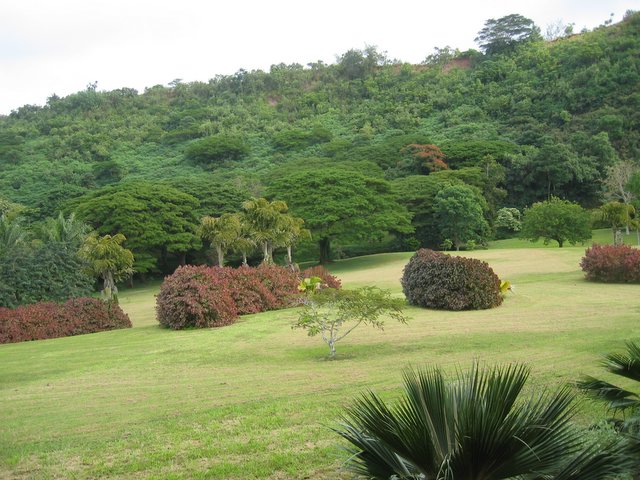
 On the south coast of Kauai, we also visited McBryde Garden, the site of an old estate. You take a tram back to the garden, passing by Allerton Garden, shown above, which was also the site of an old sugar plantation mansion, and before that, the living site of Hawaiian royalty.
 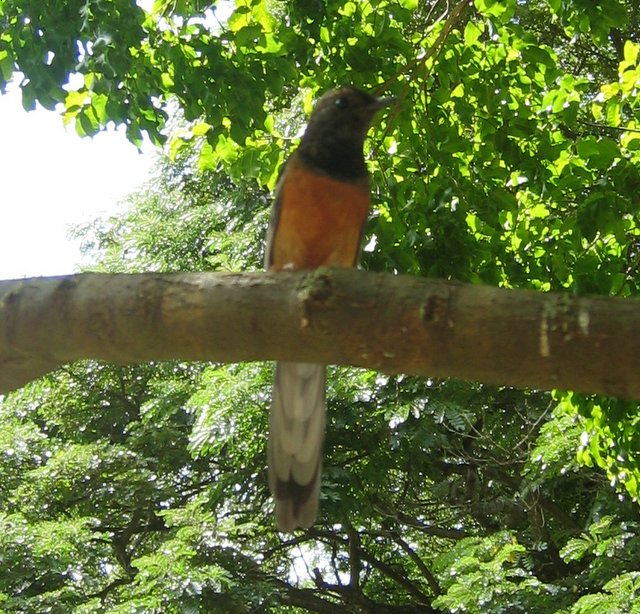 White rumped Sharma thrush; one of the most beautiful singers in Kauai.
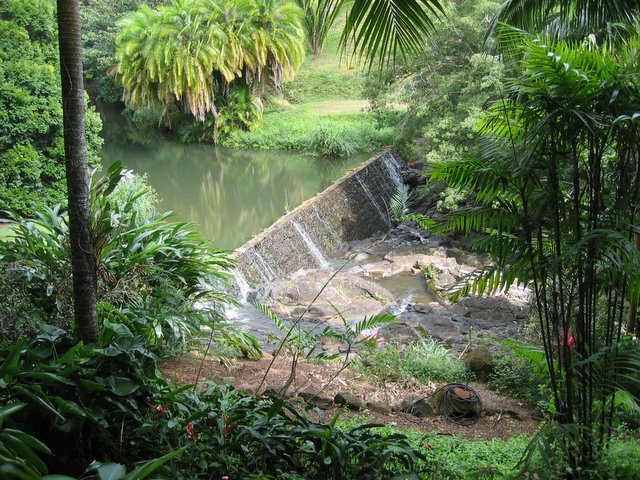
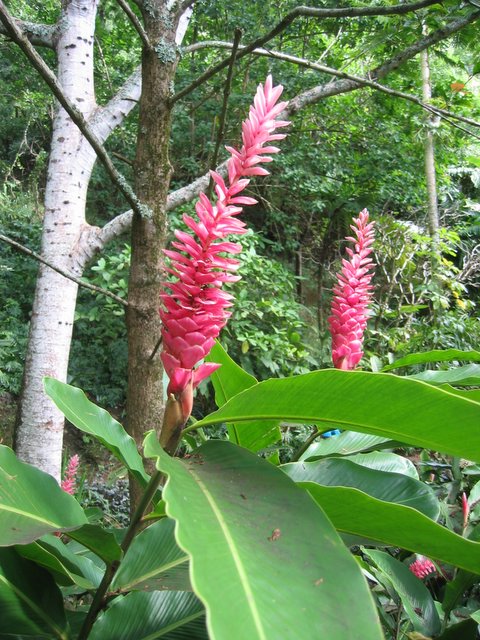
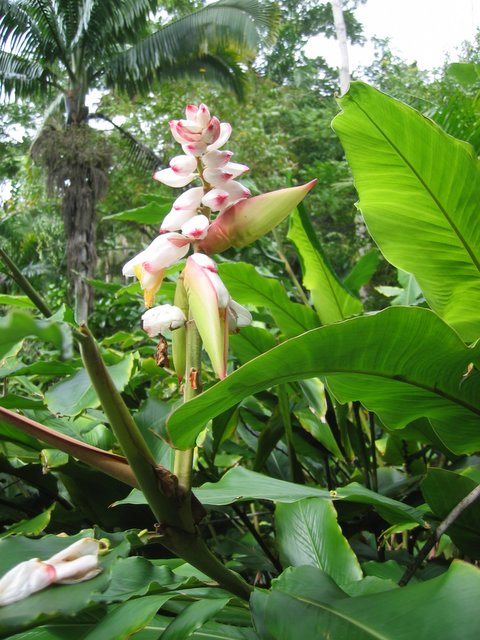
  You then enter a beautiful valley, with a stream; the McBryde Garden.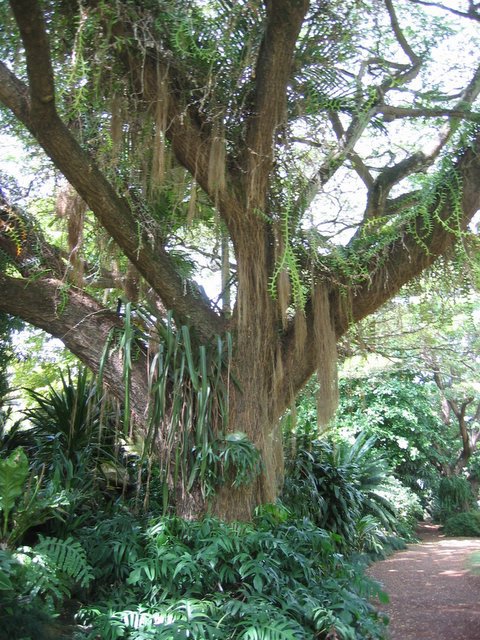



Thursday, January 26, 2006
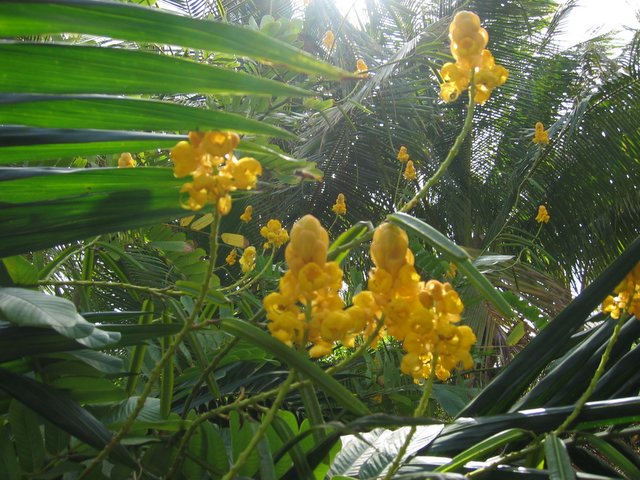
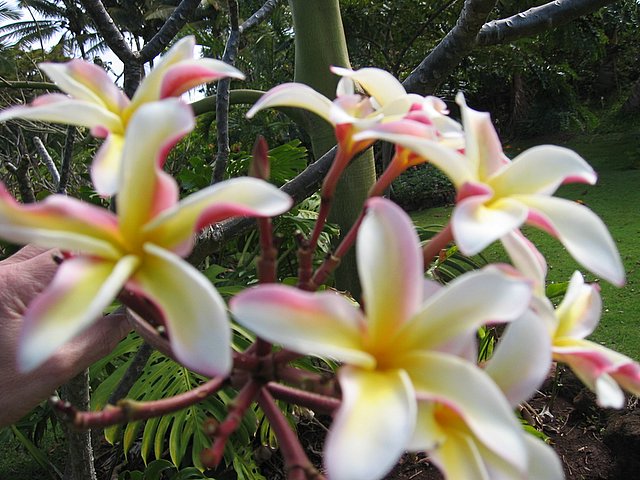
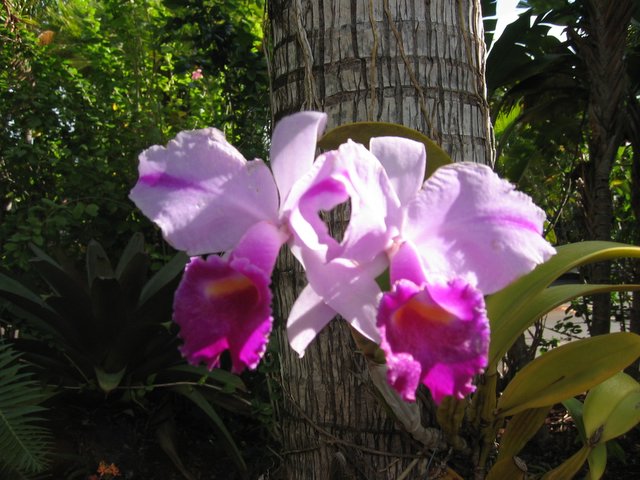
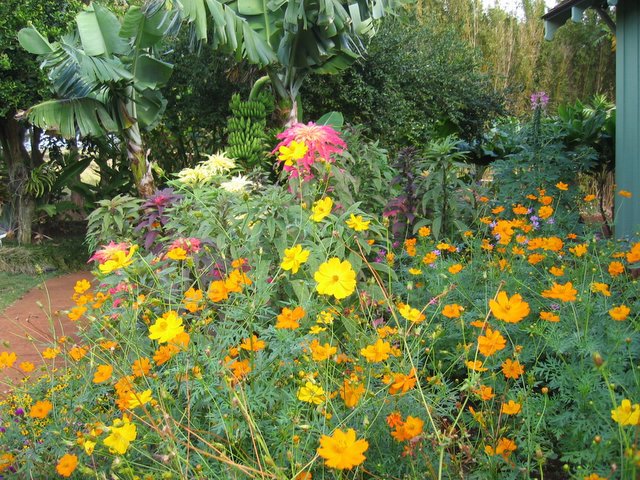
More Kauai Garden Pictures
 These pictures are from the visitor's center of the National Tropical Botanical Garden.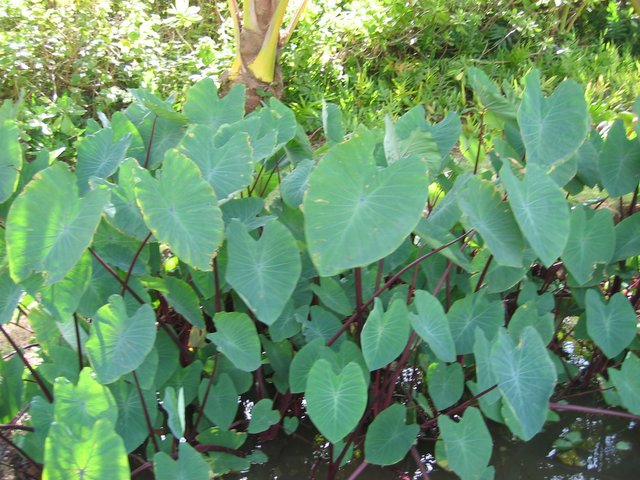
Blast From The Past: A Return To Cold Weather Predicted
So, December was a month of record cold, January has been very warm, and now apparently we are poised to have monumentally cold weather in early February. As mentioned in a recent post, Tom Skilling of WGN weather in Chicago, predicts that the NAO that I've talked about (a persistent but migratory bubble of warm air that sits over the North Atlantic), will move westward over Greenland, blocking the jet stream over the U.S., which will buckle southward, causing polar air that has been trapped over Alaska, to pour southwards, hitting mainly the eastern U.S., but Iowa will be also under this river of cold... the temperature at Fairbanks has recently been 50 below zero, so this could be shockingly cold, especially with the lack of snow cover.
Wednesday, January 25, 2006
The Revealing Garden
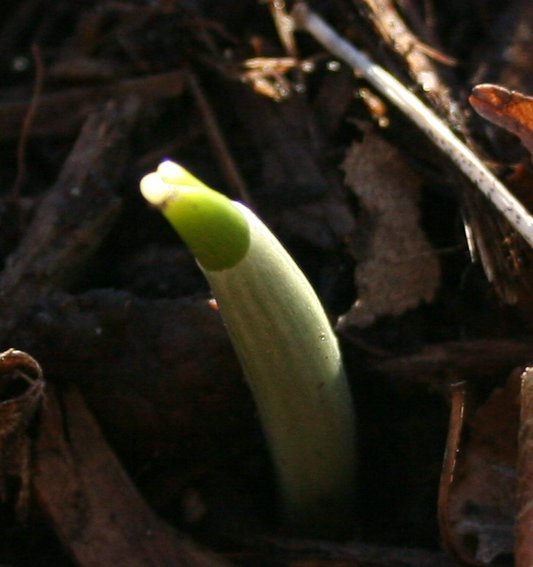 Flower gardens can, indeed, be riveting; slowly revealing one small facet of themselves after another, ensnaring your attention. If anticipation is, in fact, more powerful than realization, then can there be anything more exciting in the garden than seeing small bulbs first making their appearance in the early part of the gardening year, when the frozen ground is just beginning to thaw, and the rest of the showier plants are still in their winter slumber? This is when I most love having a more natural garden, with all sorts of bulbs scattered here and there through the woods, so that one must get down and brush aside the leaves to closely inspect these little pioneers, having to puzzle out their identity if they are wanderers. It is especially thrilling to watch for bulbs that are new to the garden, to see if they have weathered our usually rugged winters, and to marvel at the small perfection of the plant if it lifts its head to see its first Iowa spring. Above is pictured Galanthus ikariae, a snowdrop species that I planted for the first time last fall. I'm especially pleased to see it, as Mrs. Graff, in her book "Flowers in the Winter Garden", states that it was not hardy in her garden on Long Island (7a), but here it is, looking jaunty and right at home. I have hope for it, in spite of Mrs. Graff's experience, as it is native to Russia and the Caucasus, but I won't get too attached to it just yet, as she seems to intimate that it comes up, but then freezes in late cold spells. This raises the question of whether I should mulch it, hoping to retard its growth until later in the spring, or just leave it alone... stay tuned.
 The First Bird
 The first bird singing softly, on a January day,
makes me dream of flowers, in Iowa in May.
_______________________________
db
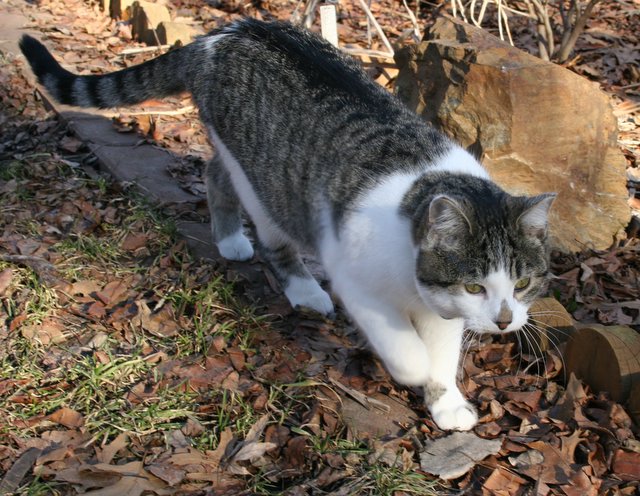
Today it begins; on a sunny, mild day, the tufted titmouse cleared his throat and began his "Peter Peter" call from an oak tree on the hill; the first bird song of the new year. The songbirds start their courtship and territorial claims tentatively and softly at first, not being sure if this is really spring, or just an interlude in a long winter (being older, wiser, and more cynical, I know it is a false spring, but I can appreciate the birds' impatience). A walk in the garden shows foliage from last year, like the epimedium above, still in good shape, and a myriad of bulbs peeping up to see if the warm sun is for real. Whenever I go out for a garden walk, I never get more than half way across the yard to the garden gate, when I hear a thump, and look back to see one of our kitten-cats, P.J., blasting out through the cat door to catch up with me, her legs being so short that I always wonder that her stomach doesn't scrape on the ground. She has become quite the little garden cat, following me about everywhere, stopping to climb her favorite trees, from whose limbs she gets so intent on looking about at all the birds, that she almost falls out of the tree.
Tuesday, January 24, 2006
Kukui-O-Lono Park
 Kukui-O-Lono park on the south coast of Kauai, is the site Of Walter McBryde's former estate. Most of it has been converted into a golf course, but a small remnant of his original garden remains. Shown below is the view to the ocean, a red crested cardinal (common on Kauai, but native to Brazil), and views of his Japanese garden.