Wednesday, May 31, 2006
Amazing Aroids

The aroid family, is characterized by "flowers" that include a spathe (a protecting leaf structure) surrounding the spadix; the family includes philodendrons, and of garden interest here in Iowa, arisaemas (jack in the pulpits) and their smaller look-alikes, pinellias. This is perhaps the queen of jack in the pulpits, Arisaema candidissimum, the white jack, from the Himalayas. Most are sweet-smelling, but I can't detect any scent in ours; it is still lovely, with a pink-tinged white spathe, and large, rather rounded leaves.

Pinellia is closely related, and similar in flower, to jack in the pulpits. Pinellia tripartita 'Dragon Tails", has a long, erect spadix.

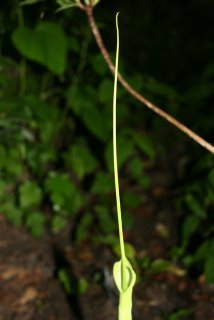
Arisaema costatum, is a Chinese jack in the pulpit which is quite striking, in that its spadix is up to a foot long, and threadlike, reaching clear to the ground, for beetles to climb up. The leaves can be up to three ft. across.
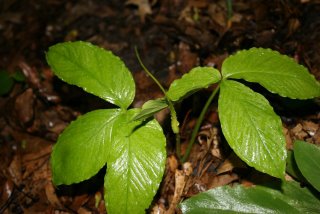
Pinellia tripartita 'Golden Dragon, has leaves that are bright yellow when they unfold, becoming light green by the time the flower appears.

Arisaema fargesii is a Chinese jack in the pulpit that is wonderfully tropical, due to its huge (up to 2-3 ft. across) leaves that are shiny, lush green, with the flower arising at the base, being striped and heavily cowled.
Tuesday, May 30, 2006
Whose Garden Is This?
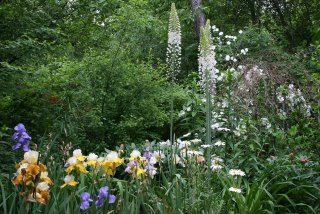
I almost feel like a stranger in my own garden, going for a walk today; between other commitments, and steamy hot 90's temperatures, I've hardly set foot in the place this last week. That's the nice thing about a natural woodland garden; who's to say the weeds and overgrowth aren't supposed to be there? Above are iris, eremurus (desert candles), and mock orange in the back.

Closer shot of seven foot tall Eremurus robustus.

Summer lushness is entering the garden.
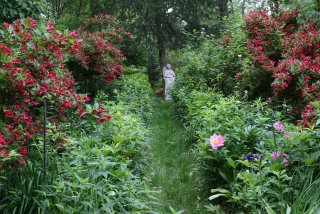
Two long rows of red weigelia 'Red Prince', back long perennial beds that were filled with blooming daffodils in the spring, then bloom again in mid-summer, with day lilies and phlox.

The clematis are also in bloom.

This pathway leads up to our life-size gargoyle.

Another pathway, with blooming cardinal shrub.

Japanese maple and heuchera 'Amethyst Mist'.

This is a hosta bed just planted last spring, but coming along nicely... wait until next year!
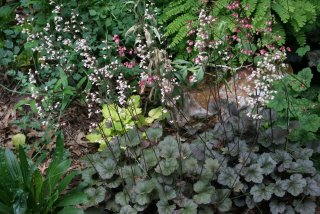
Heucheras.

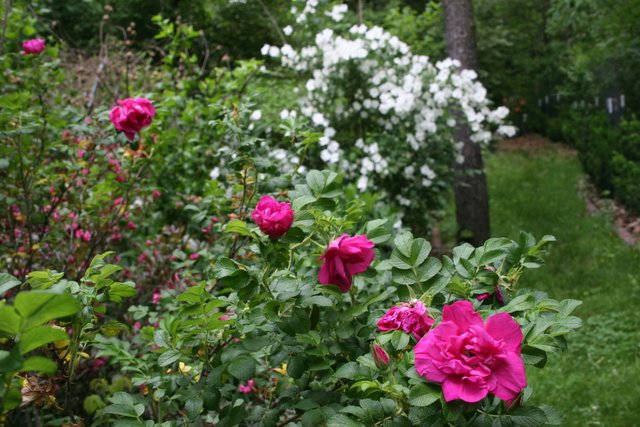
One of the paths in the back of the garden, with a deep ravine on one side, and roses and a mock orange blooming on the other side.
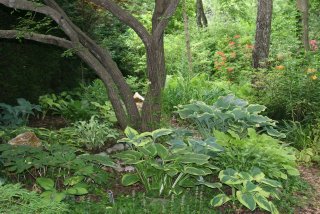
One of the hosta beds, this one surrounding an Amur maple.

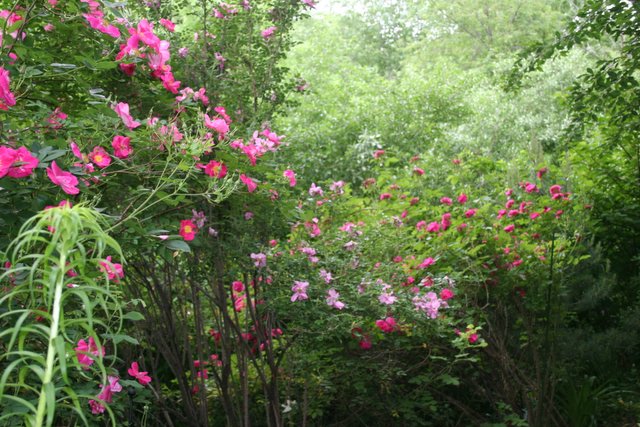
We have a lot of old fashioned roses in the garden, which are all in full bloom right now, spreading their fragrance throughout the area.

Old fashioned roses always look cute when you buy them in a one gallon pot; eventually you realize they grow as big as a garage!
Wednesday, May 24, 2006
Rhododendron Trinidad

Rhododendron 'Trinidad' grows in a shady nook just across the bridge in the ravine.
The Babbling Brook
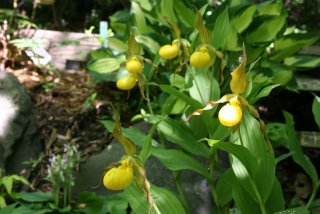
Our garden occupies a rolling piece of woodland, cut by several ravines, and overlooking a four acre pond. The garden pathways wind their way up and down hill, so it makes for an interesting "hidden" garden. At the top of one of these ravines is our goldfish pond, and I've always wanted to have a small artificial stream bubbling down through the bottom of this ravine, pumping water from the four acre pond, about fifteen feet in elevation up to the goldfish pond, then letting it run back downhill. So far, the stream itself basically only burbles in my mind, for I just never seem to get started on it. The lower, shady part of the ravine is however, slowly getting filled in with lots of plants like the yellow ladyslippers and showy orchis seen above by the steps which go down one side of the ravine to a wooden bridge that spans ten feet across to the other side. I think this could be the year that I finally start construction on at least the top part of the long-discussed babbling brook. Or not.
Tuesday, May 23, 2006
A Warm Garden Walk

On the first late spring day that gives a hint of summer, with a blue sky and a warm breeze, the garden is also starting to turn over to summer, with bearded iris in bloom, and the lepidote rhododendrons of spring have given over to the lushness of the large-leafed elepidote rhodys. This is 'Peter Behring', with bright pink blooms.

Heuchera 'Starry Night' is aptly named.

Azalea 'Klondyke' is so widely sold in box stores that it's easy to dismiss it, but it has a lovely fragrance, and a bright presence in the garden.

Azalea 'Northern Tri-lights': I love its unique, electric pink color.

 The aroid family, is characterized by "flowers" that include a spathe (a protecting leaf structure) surrounding the spadix; the family includes philodendrons, and of garden interest here in Iowa, arisaemas (jack in the pulpits) and their smaller look-alikes, pinellias. This is perhaps the queen of jack in the pulpits, Arisaema candidissimum, the white jack, from the Himalayas. Most are sweet-smelling, but I can't detect any scent in ours; it is still lovely, with a pink-tinged white spathe, and large, rather rounded leaves.
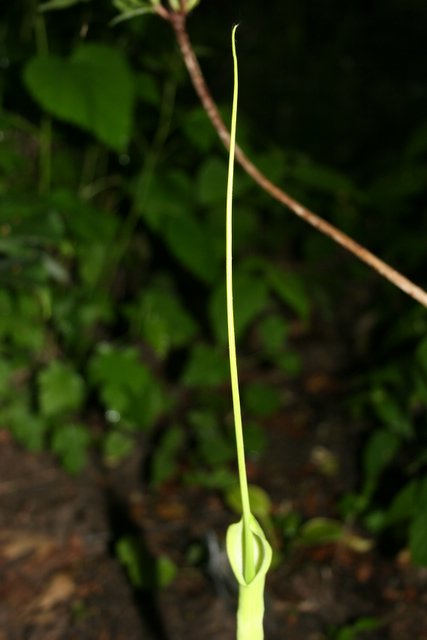 Pinellia is closely related, and similar in flower, to jack in the pulpits. Pinellia tripartita 'Dragon Tails", has a long, erect spadix.
 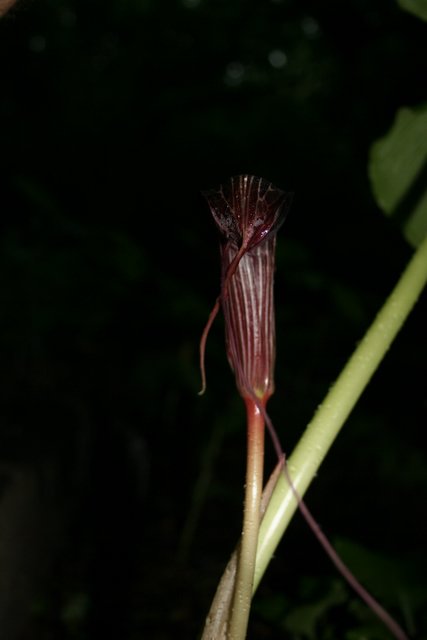 Arisaema costatum, is a Chinese jack in the pulpit which is quite striking, in that its spadix is up to a foot long, and threadlike, reaching clear to the ground, for beetles to climb up. The leaves can be up to three ft. across.
  Pinellia tripartita 'Golden Dragon, has leaves that are bright yellow when they unfold, becoming light green by the time the flower appears.
 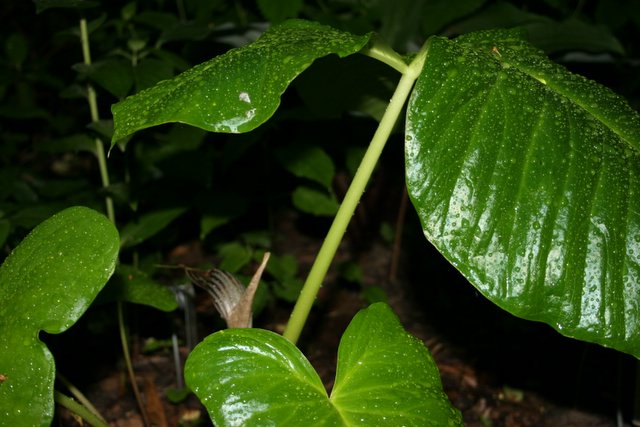 Arisaema fargesii is a Chinese jack in the pulpit that is wonderfully tropical, due to its huge (up to 2-3 ft. across) leaves that are shiny, lush green, with the flower arising at the base, being striped and heavily cowled.
 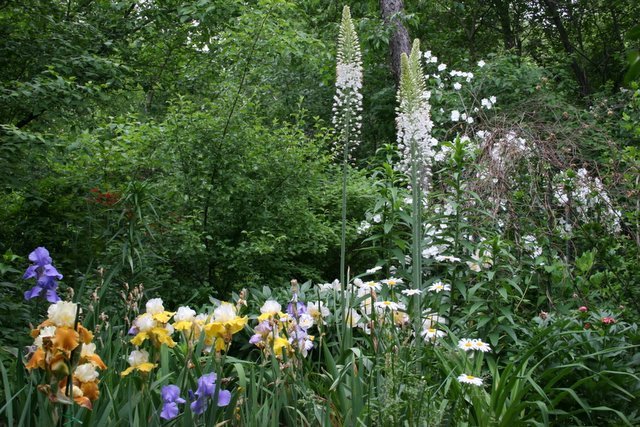 I almost feel like a stranger in my own garden, going for a walk today; between other commitments, and steamy hot 90's temperatures, I've hardly set foot in the place this last week. That's the nice thing about a natural woodland garden; who's to say the weeds and overgrowth aren't supposed to be there? Above are iris, eremurus (desert candles), and mock orange in the back.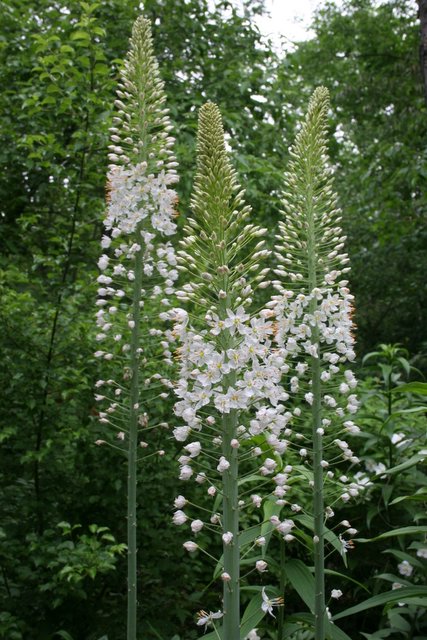

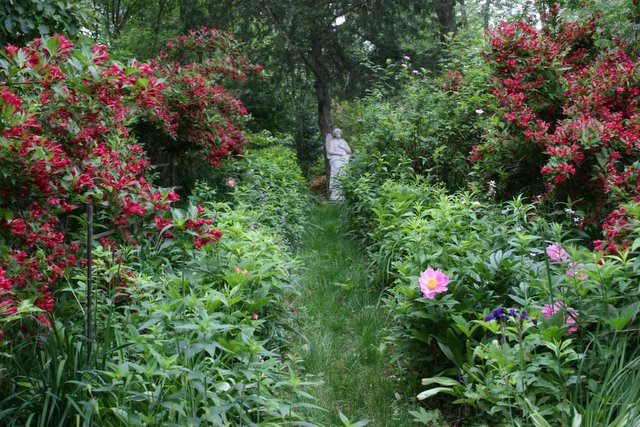 Two long rows of red weigelia 'Red Prince', back long perennial beds that were filled with blooming daffodils in the spring, then bloom again in mid-summer, with day lilies and phlox.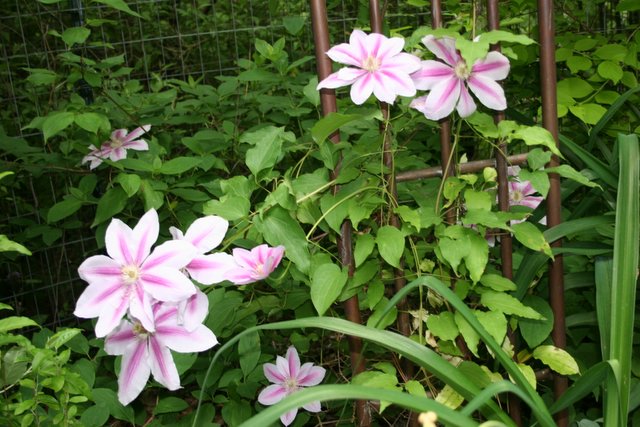
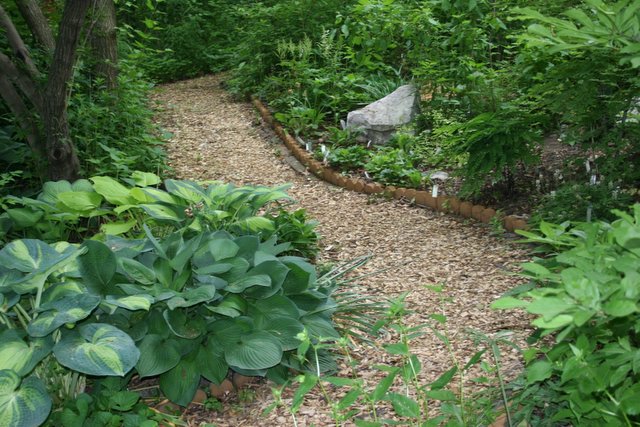


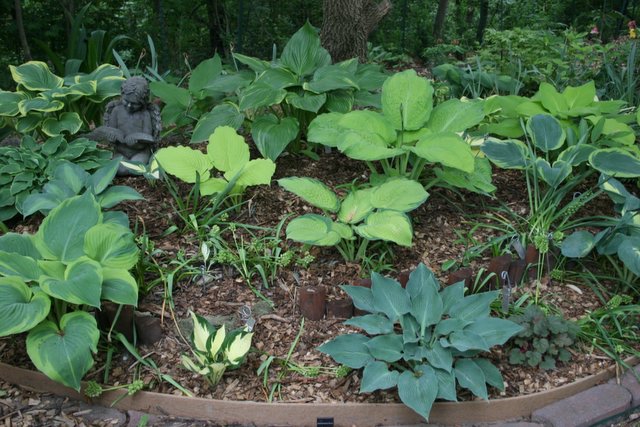 This is a hosta bed just planted last spring, but coming along nicely... wait until next year!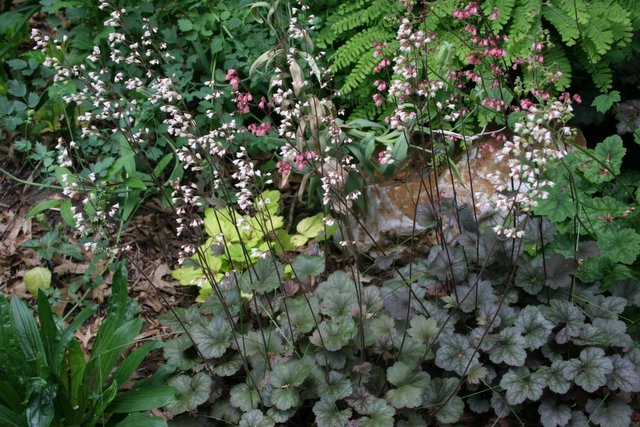
 One of the paths in the back of the garden, with a deep ravine on one side, and roses and a mock orange blooming on the other side.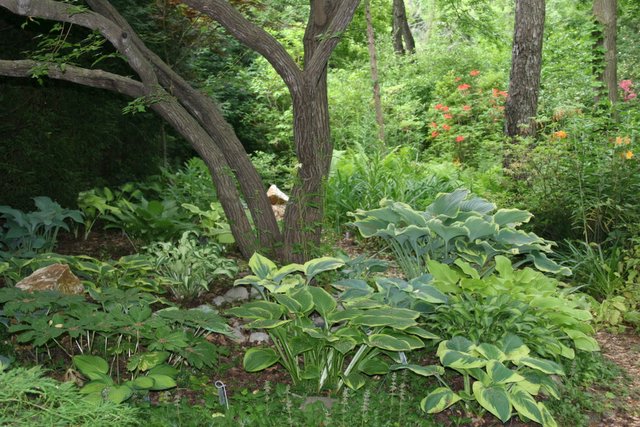
 We have a lot of old fashioned roses in the garden, which are all in full bloom right now, spreading their fragrance throughout the area.
  Old fashioned roses always look cute when you buy them in a one gallon pot; eventually you realize they grow as big as a garage!
 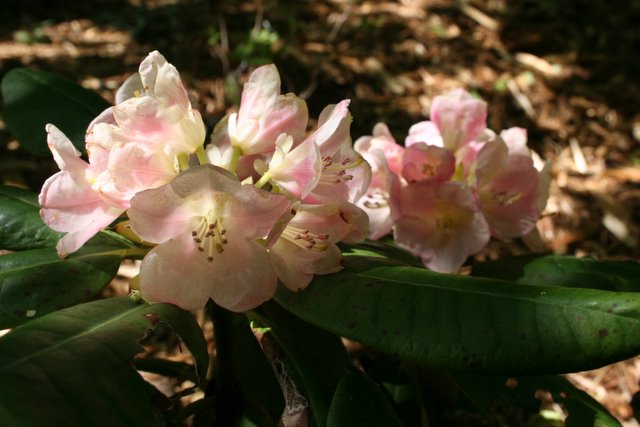 Rhododendron 'Trinidad' grows in a shady nook just across the bridge in the ravine.
  Our garden occupies a rolling piece of woodland, cut by several ravines, and overlooking a four acre pond. The garden pathways wind their way up and down hill, so it makes for an interesting "hidden" garden. At the top of one of these ravines is our goldfish pond, and I've always wanted to have a small artificial stream bubbling down through the bottom of this ravine, pumping water from the four acre pond, about fifteen feet in elevation up to the goldfish pond, then letting it run back downhill. So far, the stream itself basically only burbles in my mind, for I just never seem to get started on it. The lower, shady part of the ravine is however, slowly getting filled in with lots of plants like the yellow ladyslippers and showy orchis seen above by the steps which go down one side of the ravine to a wooden bridge that spans ten feet across to the other side. I think this could be the year that I finally start construction on at least the top part of the long-discussed babbling brook. Or not.
 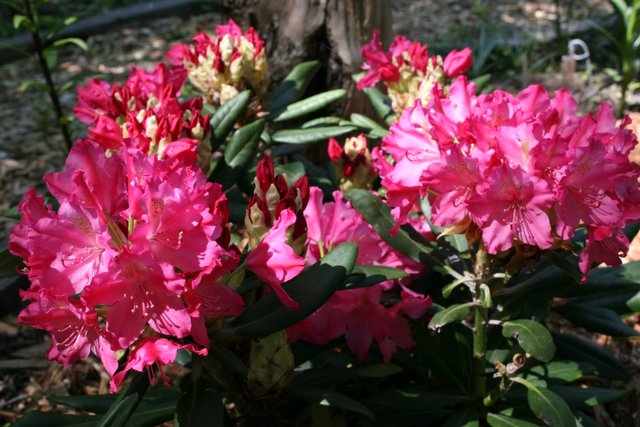 On the first late spring day that gives a hint of summer, with a blue sky and a warm breeze, the garden is also starting to turn over to summer, with bearded iris in bloom, and the lepidote rhododendrons of spring have given over to the lushness of the large-leafed elepidote rhodys. This is 'Peter Behring', with bright pink blooms.
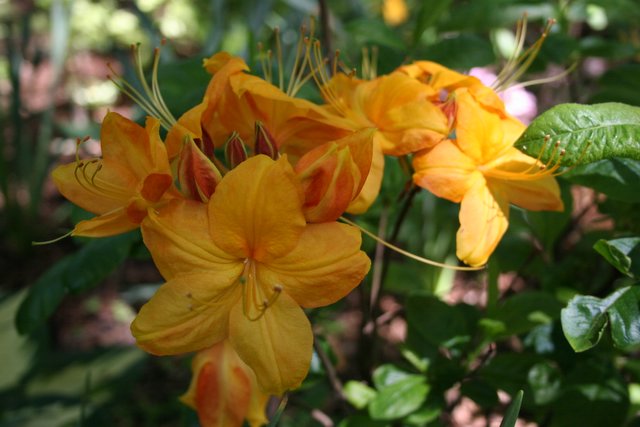 Azalea 'Klondyke' is so widely sold in box stores that it's easy to dismiss it, but it has a lovely fragrance, and a bright presence in the garden.
  Azalea 'Northern Tri-lights': I love its unique, electric pink color.