Saturday, December 31, 2005

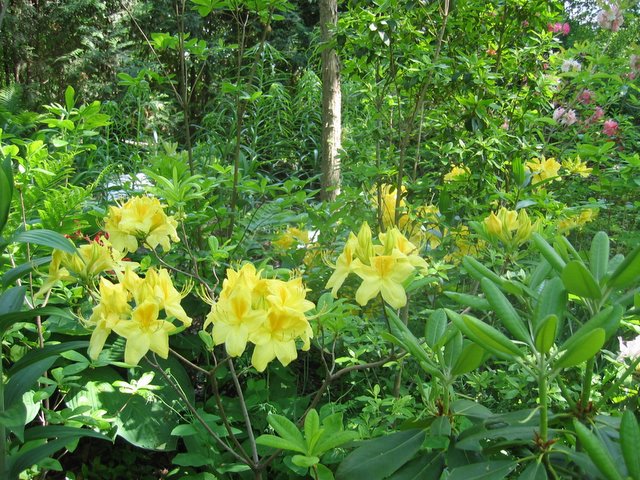
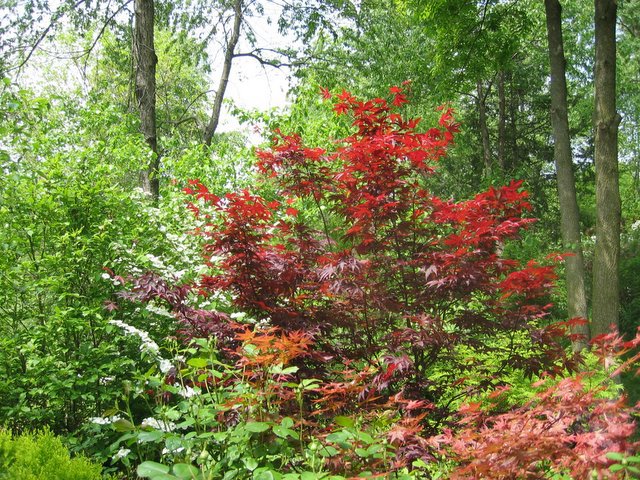
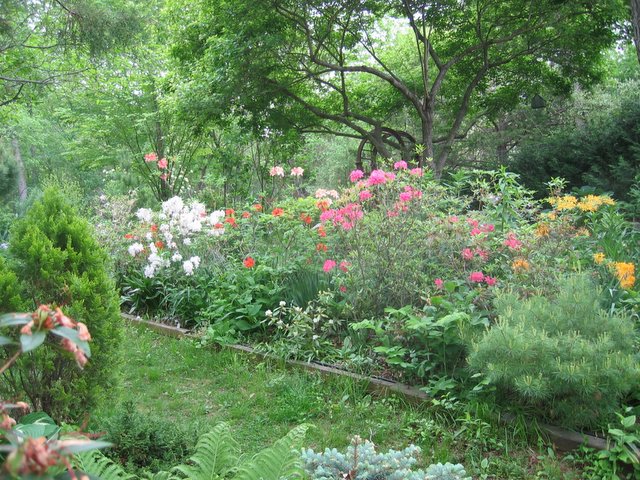
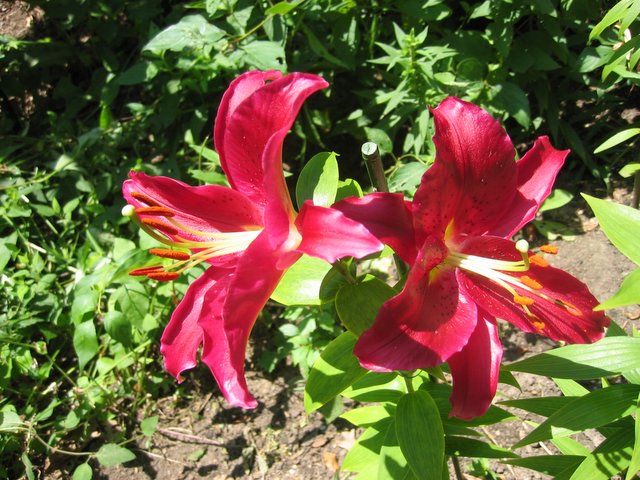
Winter Re-Runs: The Garden on 7/30/04
 Posted by Picasa

 Posted by Picasa

 Posted by Picasa

The Good Customer

What is it about mailorder nurseries? I'm not aware of any other business sector that is so testy about the behavior of its customers, and spends so much on ink, complaining about it in their catalogues. Either the people who sell plants through the mail are by nature a cranky and inflexible bunch, or gardeners are an ungrateful and demanding lot. Two of my favorite catalogues, Plant Delights and Arrowhead Alpines, always have extensive essays instructing us on how to be a good customer. I've never thought I needed anybody telling me how to behave when buying something, but after this last spring, I'm not so sure. I ordered quite a bunch of plants from Arrowhead, and as we had late snow that spring, it took a while to get them into the garden; when I finally got around to planting them, I found about ten plants missing, and e-mailed the nursery to complain about it. The next day it dawned on me that all the missing plants were dormant tubers, as opposed to potted plants, and I remembered I had put the former in a cold garage closet, rather than in the greenhouse, and had just forgot about them. Now, Bob, the owner of Arrowhead has the reputation of being the soup nazi of the mailorder nursery world, so it was with some trepidation that I called him to explain my mistake, but he was quite nice about it (though on hearing my name, he did say "Oh, you're the guy with the terrible handwriting" hey... I'm a retired doctor). Then this summer I e-mailed Barry Yinger of Asiatica, complaining that my Tricyrtis flava had bloomed purple instead of yellow, obviously being the wrong plant. He was very gracious, promising to make it good with my next order. A few days later, the tricyrtis next to that plant started putting out yellow buds, and I realized I'd just switched the labels. It will be interesting to see if anyone highlights their instructions to the customer in the catalogues they send me this next spring.

Wednesday, December 28, 2005

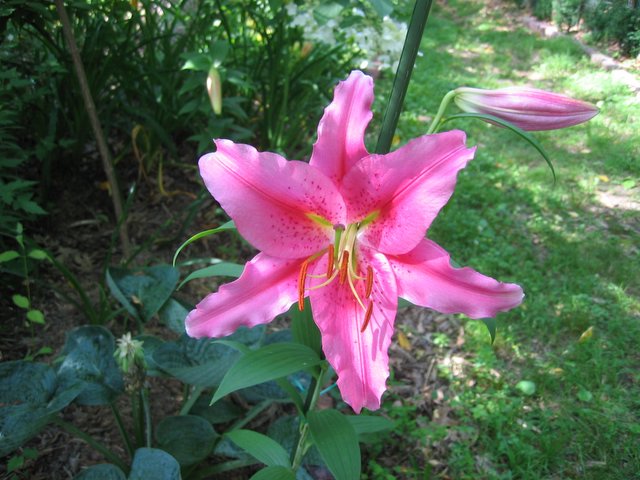
Winter Re-Runs: The Garden on 7/9/04
Posted by Picasa

 Posted by Picasa

 Posted by Picasa

HTV

Considering that gardening is one of the most popular hobbies in the country, it is odd that there are so few television shows catering to gardeners. HGTV used to have a couple of very nice garden shows, which after being re-run a couple of hundred times, disappeared altogether, to be replaced by yet more home remodeling shows... I call this channel "HTV", now. I would imagine that it's a question of ad dollars, in that much of the gardening industry is still dominated by smaller businesses, which do not have national advertising budgets. The one show I miss most of all, though was called, I think, Garden Architect, and had three sections each week; the first was the garden architect host (Michael?) touring a garden, the third part was a gorgeous Australian gal making birdhouses and such, wielding a saw and paint while in full makeup, and a silk blouse. The middle segment was my favorite, though: a fellow who would each week stop by somebody's urban home to solve their outdoor decorating problem; usually a dreary little backyard with a view of a garage, or perhaps just a deck overlooking an alley. He obviously had a VERY modest budget for his segment, as his creations were equally modest, bordering on cheesy, and quite similar from week to week. If there was a deck or patio, you could count on him first laying down a square of some type of cheap carpeting (which with the first rain would undoubtedly become permanently wet and mildewed). His next addition was always some inexpensive plastic furniture, then the finishing touch: a couple of old pieces of wrought iron, like a piece of fencing and a couple of iron trivets, which he would nail to the side of the garage, with maybe an old, rusting birdcage hanging from a tree. At the end of his segment, he would show the client around his creation, and here's the part I always watched the show for: with the plastic furniture and whatnots that he placed down, there were naturally certain paths that you would have to take to walk by or through them, and in his presentation, these became grand walkways; it was as if an English Lord was showing you through his 500 acre formal garden. The host would dramatically cast his hand towards the plastic chair and table he had just put down, and say "and as you walk down here to the shady area, you can either walk THIS way, or you can take the longer route and come around THIS way, to go out to the main yard" (meaning you could walk to the left or the right of the plastic chair to get to the garbage can in the alley). God, I loved that show. Once in a while, when I'm showing somebody around our garden, I'll point to a bush or something and say "and here at the rose bush, you can either walk THIS way, or you can take the more scenic route and walk around THIS way", but I know that nobody ever knows why I think that's funny.

Monday, December 26, 2005

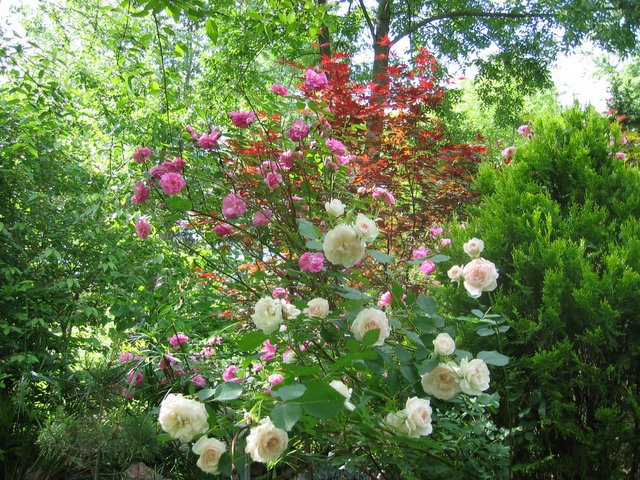
Winter Re-Runs: The Garden On 5/27/04
Posted by Picasa

 Posted by Picasa

 Posted by Picasa

 Posted by Picasa

Sunday, December 25, 2005

Winter Re-Runs: The Garden On 5/23/04

 Posted by Picasa

 Posted by Picasa

 Posted by Picasa

 Posted by Picasa

 Posted by Picasa

 Posted by Picasa

 Posted by Picasa

Saturday, December 24, 2005

Merry Christmas

Merry Christmas (or is it Happy Holidays) to everyone. My 96 year old aunt is absolutely sharp as a tack, but I've decided her eyesight may be failing a bit; she wrote back to us that she really enjoyed our Christmas card this year, but couldn't figure out HOW we got the kittens to hold still, with those little Santa hats on, and she showed it to three other people in her nursing home, and they couldn't figure it out either! Posted by Picasa

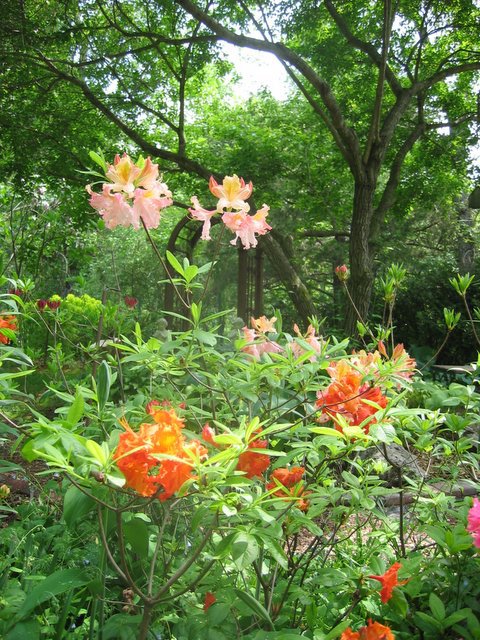
Winter Re-Runs: The Garden On 5/`11/04
Posted by Picasa

 Posted by Picasa

 Posted by Picasa

 Posted by Picasa

Merry Bells and Fairy Bells

I'm not sure why, in the middle of winter, that I've been thinking today about the woodland lilies; a group of six genera of plants that are in the lily family: Disporum, Smilacina, Streptopus, Polygonatum, Uvularia, and Disporopsis. I don't grow Streptopus, though S. rosea, or rosy twisted stalk is native to Iowa, and I remember seeing it in the woods as a child. I do have examples of all of the other groups growing here in the garden, and they can be sort of confusing: Disporum has five species in this country, and another thirty five or so in Asia, and are often called merry bells or fairy bells (though the two species in the S.E. of this country are often called mandarins). Uvularia is native just to this country, and look for all the world like Disporums (but they have capsules instead of berries for seed). Iowa has two native Uvularias, which we usually call merry or fairy bells, since we have no Disporums... then there are the Solomon's seals (Polygonatum), the false Solomon's seals (Smilacina), and what are sometimes called evergreen Solomon's seals (Disporopsis). Well, anyway, someday I'm going to write up a real report on all of these, with pictures of all of them we grow... in the meantime you might want to consider growing Disporum flavens (also called flavum, or just for real confusion, in older literature, uniflora). This is also called Korean bellflower or fairy bells. It is usually thought to be the best of the genus, being fairly tall, to two feet, and very healthy and vigorous looking. It is one of those plants (like Jack in the pulpit) that sort of unfolds as it arises in the spring, so it always is interesting to watch; when I first grew it, I thought it had been damaged by frost, as it appeared all crooked and bent over in early April, but then it unfolded and rose up, and bloomed, with its pretty, light lemon yellow flowers. Posted by Picasa

Friday, December 23, 2005

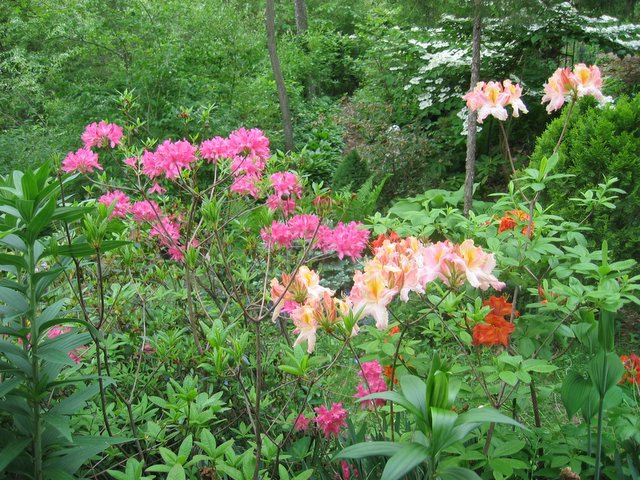
Winter Re-Runs: The Garden On 5/10/04
Posted by Picasa

 Posted by Picasa

 Posted by Picasa

The Database That Never Was

For years, I've wanted to put together a database for all of our garden plants. In pre-computer days I did start a couple of notebooks listing some of the plants, but then I'd move, and never had the time to restart a list since moving to our present house, until now. Unfortunately there is a little issue of a foot of snow (it was a foot and a half, but we've had some melting the last couple of days) so at least the tops of the plant labels are showing, but the database is on hold. Posted by Picasa

The Indoor Garden

There may be a foot of snow outside, but I do have a little garden sanctuary; our attached greenhouse, right off of the living room. The two tanks on the left have the water plants and the goldfish from the garden pond, which I bring in for the winter. When the sun gets a little brighter in January and February, there can be deep snow, and it can be 10 below zero outside, and the exhaust fans will go on in the greenhouse because the sun has warmed it above 80 degrees; kind of nice. Posted by Picasa

 Posted by Picasa

Thursday, December 22, 2005

Winter Reruns: The Garden On 5/8/04

 Posted by Picasa

 Posted by Picasa

 Posted by Picasa

 Posted by Picasa

 Posted by Picasa

 Posted by Picasa

 Posted by Picasa

 Posted by Picasa

Wednesday, December 21, 2005

Crazy?

No, you're not crazy (well, maybe you are... what do I know), but in this case you're right; sometimes my essays do change after they've been posted. One of the other readers has somewhat pointedly asked about this... artistic license seems to get you nothing anymore. I must confess this blog is somewhat of a stream of conciousness sort of thing, but I also have a conscience, and after posting, I do feel obligated sometimes to go back and tidy up some of my more messy stories, so the blog probably does sometimes have the feel of a literary quicksand. I'm not sure what surprises me more about being called to task about this: that anybody would be huffy about me editing my posts on the fly so to speak, or that anybody would re-read one of my posts in the first place, so they'd notice.

Winter Re-Runs: The Garden On 4/28/04

Posted by Picasa

 Posted by Picasa

 Posted by Picasa

 Posted by Picasa

 Posted by Picasa

 Posted by Picasa

 Posted by Picasa

Tuesday, December 20, 2005

Winter Re-Runs:The Garden On 4/19/04

Posted by Picasa

 Posted by Picasa

 Posted by Picasa

 Posted by Picasa

Monday, December 19, 2005

Athens Of The Midwest

The Midwest, and Iowa in particular, receive more than their fair share of disparaging comments about lack of culture; I'll have you know that Iowa City is an unheralded bastion of good taste and appreciation for the finer things; above is a picture from a parade here... eat your hearts out, Coasters. Posted by Picasa

Sunday, December 18, 2005

What Demons Are These?

When I lived in Berkeley in the 70's, I lived right off of Telegraph Avenue, had hair down to my shoulders, and an attitude. I loved the ferment of folk-rock music that was all about the area then, and one day walked over to the Greek Amphitheater on the U.C. campus to see a concert sponsored by a new organization, Bread and Roses, who were raising money for their goal of providing free, live music for those in institutions; prisons, nursing homes, and the like. The spearhead for Bread and Roses, who came out on stage that day, and softly sang and looked like an angel, and had the crowd in the palm of her hand, was Mimi Farina. Even at that time, she was the stuff of music legend; the younger sister of Joan Baez, she had come to New York when Bob Dylan was having an affair with Joan, and her amazing beauty at age 17 had struck Bob Dylan like a thunderbolt, and he pursued her, but Mimi instead went off to Paris, where she met folksinger Richard Farina, and married him. Mimi and Richard came back to California, living in Carmel Valley, and put out several albums, which I already had in my record collection when I moved to Berkeley. Mimi had at that age a beautiful, open face, and a sweet, clear singing voice. It is said by some that Bob Dylan copied some of his song writing style from Richard Farina, and in listening to those old albums, I can hear what they are talking about with a marriage of poetry to rock music. Richard died in a motorcycle crash on Mimi's 21st birthday. Mimi, after disappearing for a while, went on to sing solo, and with other musicians, perhaps most notably with Tom Jans; I also have one of their old records, which I will pull out tonight and listen to. She never really achieved true fame or fortune, though, but went on to found Bread and Roses. She lived in a small house on the ridge behind Mill Valley in Marin County, a house I knew, as I used to hike Mt. Tamalpais, near her home, frequently. The reason I bring this all up, is that I was quite astonished to learn yesterday, that she had died in 2001, at the age of only 56... I guess I'm out of the loop for pop music news now. She had hepatitis C, which likliest was from i.v. drug abuse, and died of lung cancer from smoking. How that sweet-faced young girl of the 60's, with placid, grey eyes that looked out to the ends of the earth, could have had such demons clouding her life, so she ended up as she did, is an enigma... I would not want to portray her as some end of the line loser, as she had an incredibly rich and meaningful life, but it's still a sad story, if only for its shortness. The last years of her life were devoted to raising the money to endow Bread and Roses. Ah well, I guess I'll go pull out that record album. Posted by Picasa

Ranunculus ficaria

I just love these little plants, but have to say, don't try these plants at home, kids. They are considered an invasive pest in much of New England, and even as close to us as Wisconsin. Several States are considering banning them. Ranunculus ficaria supposedly goes by the name lesser celadine, but I don't know anybody that calls them that; for that matter, I don't know anybody else who even has them... for some reason they are not exactly a must-grow item here in the plains. When they push up their shiny little leaves in the early spring, I never fail to get down and examine them closely, and always find them delightful. The leaves, which sometimes have a deep chocolate-purple sheen, are reason enough for me to grow them, and the beautiful little buttercup flowers (they do, indeed reside in the buttercup family), are a further delight. I grow two different single-flowered ficarias: Brazen Hussy, pictured above, and Coffee Cream, below. The whole plant goes dormant in mid-summer, but it doesn't flop about or go through a prolonged, Camille-like dying process, and the bare spot that results is so small, that the plant's passing is almost unnoticed... it just seems to kind of disappear, as magically as it appeared. I've not noticed anything alarming about them that suggests they are going to explode into our countryside, but I have them both well esconced in contained beds right in the middle of the garden. The double-flowered forms are supposed to be much less likely to ramble about, and I do have two doubles, Picton's double, and Collarette, but so far they have been kind of wimpy here... probably our climate is just too warm for these little plants to get too frisky, as I note the States where they are a pest tend to be cooler, and wetter than us. These plants were very popular in England in the 19th century, with hundreds of varieties available, then went out of favor, but just recently have seen a resurgence of interest, with a number of new clones on the market in England, some of which I lust over, but they are extremely hard to find in this country. I'm going to try to pick up a few other varieties; it may well be that time is short, as they will be even harder to find if the New England states actually ban them. Posted by Picasa

Posted by Picasa

Thursday, December 15, 2005

Toaster

Seasons, and then lives, all will come to an end,
And so it is, we've now lost our old friend.
Seventeen years we had her, since soon after her birth,
Now she lies still, in the garden's dark earth.
She loved the outdoors, to explore, and to run,
To feel wind on her face, and snooze in the sun.
She was the sweetest of tabbies, always bringing cheer,
We'd had her so long, it seemed she'd always be here.
But time took her health, and age took her sight,
So life became painful, her days turned into night.
Only when sleeping could she now ever be free,
With cat dreams of spring days, and climbing a tree.
On her last day, even with her life taking flight,
She purred in our arms, telling us it was alright.
It may take a while to sink in that we've lost her,
So forgive us if we go to the door and call "TOASTER"! Posted by Picasa

Wednesday, December 14, 2005

Snow

The snow fell gently all the night
It made a blanket soft and white
It covered houses, flowers, and ground
But did not make a single sound
____________
a child's poem

We picked up another 6 inches of wet snow, now with perhaps 18 inches on the ground. Pretty, until you have to shovel it. Now they are predicting we go back in the deep freeze for the next two weeks, with temperatures 15-20 degrees below normal. If you live in the south, I don't want to hear from you right now!

Tuesday, December 13, 2005

Further Ramblings In The Rhododendron Dell

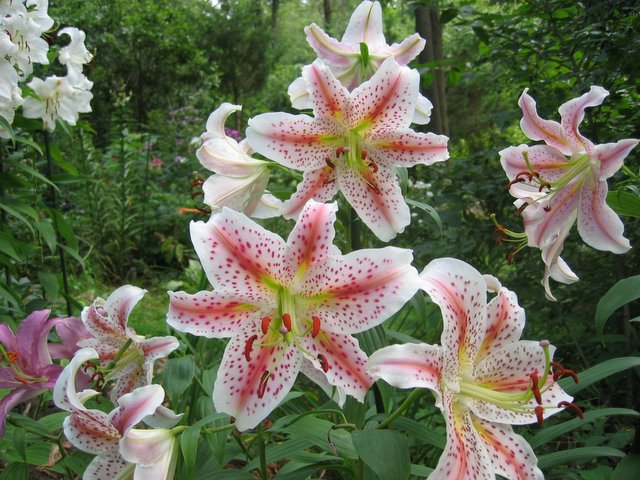
A few days ago, I showed what I call my rhododendron dell, with pictures from last April, when it was filled with lepidote (small-leaved or scaly-leaved) early rhododendrons (a further view above). This area actually goes through several metamorpheses, with the deciduous azaleas blooming a couple of weeks later, as below, then the lepidote (large or smooth leaved) rhodys, then later a variety of other plants, culminating in the oriental lilies. Posted by Picasa

 Posted by Picasa

 Posted by Picasa

 Posted by Picasa

Monday, December 12, 2005

The Jig Is Up

Posted by Picasa The other day when I posted an entry that ended up being about chiggers (usually pronounced "jiggers" around here), I couldn't get a picture of the adult chigger, or mercurochrome bug, to load, but it seems to work today, so it's up.

Pretty Sharp

On looking out the window this morning, our main bird feeding station was completely deserted; a sure sign that a hawk is about. A sharp shinned hawk then swooped in , and started circling the two large fir trees in the back yard, trying to flush out the small birds that shelter there. The hawk would alight on a branch, then continue to return to circle the firs, flying tight spirals only about six feet off the ground, and feinting with its wings wide open, to try and panic one of the little birds into bolting. Though I fancied that the trees almost trembled, everybody sat tight, so breakfastless, the hawk sailed down the valley and across the pond; perhaps to check out the Arby's in town. Posted by Picasa

Saturday, December 10, 2005

Rhododendron Dell?

We gardeners in America almost all have English aspirations; no garden here is too small or too modest to completely escape some allusion to the grand border, the white garden, or perhaps, if you happen to garden in a certain woods in eastern Iowa, the rhododendron dell. Our garden here slopes fairly sharply in spots, to the pond, and in one such area the land does form a slight bowl, which I've planted fairly heavily with rhododendrons. I call it the rhododendron dell, but only to myself... the worst aspersion you can cast on somebody here in the middle west is to call them "highfalutin' ". Besides, the term "dell" is not exactly an everyday word here in Iowa... maybe computers, or remembered faintly from a childhood song about a farmer ... there are the famous Wisconsin Dells, that everybody here is familiar with, but they bring up a vision of flat bottomed river tour boats, Tom Thumb golf courses, and of course the famous dog jumping from one sheer limestone ledge to another on the half hour, as tourists snap pictures. Somewhere we still have a photo my Mother clicked 50 years ago, with her little Brownie camera, catching the dog in spectacular mid-leap; this was one of the most valued heirlooms of our family, and much-commented on by those who saw it. Back to the present, if the truth were known, I also have, to my mind, a nice garden glade, but if I told anyone, they'd probably think I was talking about using air freshener to perfume the garden. Sometimes, living here in Iowa is a cross to bear, but I do like a good, dinner-plate sized pork tenderloin sandwich now and then. Posted by Picasa

 Posted by Picasa

 Posted by Picasa

Friday, December 09, 2005

Icicles


We are little icicles,
melting in the sun.
Can you see our tiny tears,
melting one by one ?
___________________
a child's poem

Reading Nature

Those of us privileged to live cheek and jowl with nature, over a period of many years of intimacy with the natural world, develop a certain keenness of observation and perception that allows us to interpret signs of nature that the city bred person would be perplexed by. Posted by Picasa

Today, after yet another snowfall last night, I went for a walk in the garden, slogging through the drifts of powdery snow in my rubber boots, wallowing along the paths like a walrus. By the entrance to the garden, just as you enter the front gates, there is a low wall, perhaps three feet in height, constructed of heavy limestone blocks, which in the summer has a wall fountain hung on it, gurgling away as you first stop to survey the path. Today I took a picture of the top of the wall on the way by it, to show the depth of the latest snow. After making a loop around the trails, I stopped to open the gates again, and noticed something mysterious; in the interim, some creature had blasted through the snow on top of the wall, leaving a large gap... could it have been a sharp-shinned hawk, surprising a small creature on the other side of the wall by diving right through the snow, or perhaps a red fox had leaped over the wall, and was at this moment, laughing in glee from a place of concealment, at my puzzlement... Posted by Picasa

 Posted by Picasa

Posted by Picasa Oh.

Primula vulgaris ssp. sibthorpii

The primrose derives it's name from the latin, primus (thus, first rose), and of these early bloomers, the earliest of all for me is Primula vulgaris subspecies (ssp.) sibthorpii, a brethren of the common (Primula vulgaris) yellow wildflower of the English countryside and cottage garden. Sibthorpii is native to the eastern Balkans, and its color palette of pink-lavender-red, has been combined with the yellow-white palette of the English Primula vulgaris, to produce a wider spectrum of colors. I am infatuated with sibthorpii for three reasons: it's early bloom (the above picture was taken in early March this last spring, with patches of snow still on the ground), its hardy vigor, and the delicate appearance of its flowers, which look much more like a proper woodlands wildflower (which it is) rather than like a hothouse transplant, like many of the commercial vulgaris (more properly, X vulgaris) hybrids. Sibthorpii spreads into quite a patch (though it likes to be divided every few years, a job I seldom quite get around to). It is absolutely rock hardy here, surviving 20 below zero with a little leaf mulch, and tolerates our hot, dry summers better than most of its finicky cousins.Posted by Picasa

Thursday, December 08, 2005

Winter's Garden


I've been a dweller on the plains,
have sighed when summer days were gone;
no more I'll sigh, for winter here
hath gladsome gardens of his own.
_________
Dorothy Wordsworth Posted by Picasa

 Posted by Picasa

Roaming In The Bromine

As long as we're talking about the toxic site that we used to call our medicine cabinet, how about Bromo Seltzer? As opposed to mercurochrome, Bromo Seltzer is still sold, but it's a shadow of its former self... the real Bromo Seltzer's active ingredient was sodium bromide, as opposed to the wimpy acetaminophen that is in it now. Bromide salts (sodium and potassium) were in widespread use in this country from the late 1800's to the mid-1900's, possessing a sedating, calming effect, and being cheap. Isaac Emerson, a chemist by training, in 1888 formulated Bromo Seltzer, an effervescent form of sodium bromide, calling it therefore, Bromo Seltzer. He was one of the first manufacturers to heavily advertise and market his wares, and Bromo Seltzer, in its deep blue bottle, became a staple of the medicine cabinet. I can very well remember the old Bromo Seltzer ads on the radio, called "the talking train", where a train was imitated, going "BromoSeltzer BromoSeltzer BromoSeltzer". Emerson became one of the wealthiest men in the country, erecting the Bromo Seltzer Clocktower, in Baltimore, which still stands today. It originally had a revolving 51 foot tall blue Bromo Seltzer bottle on top of it, which had to be removed in 1936, because of structural problems. The clock faces on the tower read B-R-O-M-O-S-E-L-T-Z-E-R, instead of the hours. Emerson Chemical Company went on to invent another classic of my childhood, Fizzies, a tablet you'd dissolve in water to make a particularly cloying form of soda pop, that was probably worse for you than bromine. Bromide preparations became a public health problem in the early 20th century, with thousands of people over-taking them, and some developing what came to be called bromism. It was characterized by sedation, confusion, unsteady gait, and acne like skin rashes and skin discoloration. It is documented that bromism was one of the commonest diagnoses in people entering mental health institutions at that time, with the symptoms gradually fading away after getting off bromides. It was also felt, however, that bromism could lead to chronic, irreversible dementia, and I can remember reading that at one time it was felt that bromism was one of the most common causes of chronic dementia in nursing homes. Even in 1978, when I started my medical practice, one of my first patients, who was badly demented, carried a diagnosis of bromism. However, current medical thought holds that bromism in fact rarely causes chronic dementia, and that these folks more likely were suffering from some unassociated problem, like alzheimer's. It wasn't until 1975 that bromides were banned from over the counter medications. Now, if we can just get rid of miniature marshmallows in Jello and salads, we'll be making some real progress!
If you younger folks feel smug about how people used to poison themselves, check out the label on your Mt. Dew: Mmmm... brominated vegetable oil!

Wednesday, December 07, 2005

Mercurochrome Summers

When I was a boy, lolling in the long grass of summers so long ago, that my memories of them have aquired a fuzzy patina, like flashback scenes in some old Hollywood movie, I would often see, scurrying across the dark ground, tiny, bright red insects, looking for all the world like little crabs, no larger than the point of the number 2 pencil I kept in my pocket to make note of such things, and we called them mercurochrome bugs. Who first called them that, and whether it was a name in general usage, or limited to our little gang, I never knew, but it most certainly was an apt name, as they were of a deep, saturated carmine, as red as the reddest thing we knew; the small bottle of mercurochrome, with its rubber stopper, that was a summertime fixture, sitting on the sunny windowsill in our Mom's kitchen... mercurochrome was redder than stop signs or lipstick, it was redder than the red boots worn by the cute little girl from across the street, who on rainy spring mornings would splash through every puddle on her way to school, making motorboat sounds. Mercurochrome stained everything it touched, with an indelible, metallic, scarlet color, whether it was a child's scratched skin or his t shirt, or the old green linoleum in the kitchen, if the bottle was spilled. In those long summers, we were up at the peeping of the sun, and out the door, to climb trees, build forts, and race our bikes down the steep driveway, sailing off a ramp built of used boards and bricks, with an old dishtowel tied around our neck, flying behind us, for Superman's cape. The bottle of mercurochrome was frequently needed on those days, our Mom liberally swabbing it on every cut and scrape, until our elbows and knees all glowed red; badges of summertime bravery for small boys. I bring up this recollection, as last night I began to muse about whatever happened to mercurochrome, and whether younger people even know what it is anymore. As I suspected, I found that the FDA had quietly banned it; it was a victim of the mercury scare, when people who in previous times would have contented themselves with wearing tinfoil hats, started having all of their fillings removed to prevent mercury from poisoning their brains. I will say that mercurochrome (merbromin to the chemical industry) is not something you'd use to spice up your lemonade, as it contains both mercury and bromine. In spite of the appearance of my workbench, I'm as interested as the next fellow in a clean environment, but I can remember many times when younger, rolling little balls of mercury around on the floor, or rubbing it with my fingers onto a penny, to make a silver coin, and I doubt an untrained observer could detect any brain damage in me that couldn't be explained otherwise. I am therefore pleased to see that mercurochrome has achieved a dedicated, if small, cult following, with its own fan website, who recommend that you smuggle it in from overseas. I briefly considered this, but decided I probably already have enough mercury in my body to sterilize most cuts.
This, then, brings me back to mercurochrome bugs, which when we were kids we knew were chiggers, but I don't think we knew they were the adult, non-biting stage in the chigger's life... in fact I can remember being disappointed that they always seemed disinterested in latching onto my finger when I would poke it at them. Trombicula, the genus of chiggers,which are mites, are cousins to ticks and spiders. The chigger's eggs hatch in the soil, and the larvae climb up on foliage in masses, where they can latch onto a passerby. The larvae are really tiny; barely visible, and more yellowish in color. They migrate to a hair follicle, usually where tight clothing covers the skin, where they proceed to feed. It is a misconception that they burrow into the skin, the misconception probably resulting from the tiny, almost invisible size of the mite, and because they only feed for 2-3 days, and often have dropped off by the time the welts are noticed. If, after coming in from outside, or at the first sign of a bite, you soap and gently rub your skin in the shower, you may remove the tardy mites, and help the situation a little. Of course, you want to wash all your worn clothing in hot water. When the chigger begins to feed, it does so by injecting digestive enzymes with its mouthparts, down into the dermal layers. These enzymes first of all, dissolve the cells, so the meal can be sucked out, and secondly, a tube, or stylostome is formed through the outer skin, from liquified skin cells that then harden, to act like a straw for the chigger to feed through. This stylostome is why chigger bites become so oozy and crusty after the chigger leaves, with the lymph and liquified material oozing to the surface, and the itching results from the enzymes that were injected.The larva drops off, to go through two more stages, the last being the adult, which is the mercurochrome bug (called red bugs by many, I understand, and called a harvest mite entymologically). The adults are harmless to humans, preferring to dine on the eggs of tiny insects like springtails. I don't see as many mercurochrome bugs as I used to; I don't lay about in the grass for hours like I used to, and my eyesight isn't as keen, but when I do see one of these little critters, I always think of long ago summers... mercurochrome summers.

Monday, December 05, 2005

Henry Mitchell

On a day so cold that , as I look out the windows, I can see tiny ice crystals forming out of the thin air, causing a million little sparkles as the sun rises over the snow-filled valley below, I've pulled a book out of my library to read in front of the fireplace. In this case, the book is an old friend, for it is Henry Mitchell's, One Man's Garden, the first garden book I ever bought, and I could not have made a better choice to start my garden library. If you don't know of Henry Mitchell's books, you are in for a treat. A fellow writer, Allen Lacy, who might well be our premier living garden writer, has called Henry Mitchell the best garden writer America has ever had (Henry Mitchell died rather young, in 1993 at age 68, of colon cancer). Mitchell's four books (two published posthumously) are all collections of his columns written for the Washington Post, and most deal with his everyday triumphs and tribulations in his home garden, on a long, narrow city lot jam-packed with plants, a small pond, and various garden ornaments and whatnots. Reading his books is like walking about your most delightful friend's garden, with a cup of coffee, listening to him ramble on about everything you come upon. I have a smile on my face all through reading his books. I was quite delighted to recently come upon a web site put together by a Mitchell fan, David Neumeyer, which shows some pictures from Henry's home garden, and it was just as I pictured it from his books; an absolute jumble of flowers and shrubs, with a tightly-packed bed of beautifully grown irises, and a garden pond that looks as if it was discovered in some overgrown, abandoned southern garden, rather than being in the middle of a small city lot in Washington D.C.
It has always struck me as odd (and unfortunate) that it seems as if our very best garden writers invariably publish only a handful of books; they write just enough to get you hooked, and then they are gone. It may be that part of the problem is that garden writing usually comes to people later in life; it takes many years to get your garden to the point where you feel you have something to say, and can take time to write about it rather than always having a shovel in your hand. I prefer not to think about an alternative, that garden writers may unaccountably die young.
Henry Mitchell Website

Sunday, December 04, 2005

Ten O'Clock Flower

Sometimes weeds can make you feel pretty foolish. One of my shady beds has a nice wildflower, Dodecatheon pulchellum, the dark throated shooting star, which has ovoid, slightly hairy leaves growing in a basilar cluster. I had just planted it last year, and so this spring I eagerly awaited its return, not being sure if it would be winter hardy. To my relief, it fairly sprang out of the ground as the earth warmed, and then to my delight, it rapidly formed a very large rosette of leaves, soon sending up numerous flower stalks. I was a little puzzled by the fact that the leaves were getting so long, and I became more than a little puzzled as the initial vigorous growth turned to a gallop, as the plant rapidly spread. I also didn't remember the flower stalks of the shooting star being hairy, as these were. As the flowers then opened, to my chagrin, they were small dandelion-like yellow flowers, and it dawned on me that a plant with leaves very similar to the shooting star, had almost completely taken over its spot. One small flower stalk (seen faintly in the picture) of shooting stars then struggled to open. To my horror, in getting out my weed book, I realized the yellow-flowered plant, now starting to try and spread out into the garden path by runners, was meadow hawkweed, a terrible invasive weed (which I then pulled, leaving a much-dimished, but relieved, shooting star). I felt a little tricked, as the leaves of the two plants were hard to pick apart, even side-by-side ... pretty sneaky! I always like to think that you have to get up pretty early in the morning to put one over on me, but in this case 10 o' clock would probably be early enough.Posted by Picasa

It Could Be Worse...

I've been whining rather incessantly the last couple of weeks about our early winter weather, with 6 inches of snow on the ground, and according to WGN weather out of Chicago, it is predicted that the first 9 days of December will be the coldest in the 135 years that records of such things have been kept. Last night as the snow came down, I cruised the internet, looking at other garden blogs, and ran across two that were from areas with longer, colder winters than us (no mean feat)! One was in Alaska, and one in northern Ontario. In looking over their archives, both northern garden blogs stopped talking about gardening about October 1st of last year, and went into long winter funks with nothing posted for weeks, then the occasional post about something they were knitting and whatnot. Both of them also then went completely inactive after this summer; I guess they couldn't face sharing another long winter. It's only 17 here in the middle of the afternoon, but the sun is shining, the bluejays are calling, and it seems downright balmy.

Saturday, December 03, 2005

Deer Mystery

As our second snow storm in the last few days cranks up, I ponder two things: why we bought a house with a long, uphill driveway, and what has happened to the deer. We normally have quite a herd that calls our woods home, but most of them have just disappeared... alien abductions crossed my mind, but seems unlikely. My best guess is that our drought all summer pretty much wiped out all the forest floor greenery, so that the deer migrated to be near the cornfields over the hill. You'd think at least they could drop us a postcard to let us know they're o.k. Posted by Picasa

Friday, December 02, 2005

The Wind

The wind shows us how close to the edge we are.
__ Joan Didion __

To the well known unavoidables in life, death and taxes, people here in the plains states might add the wind, for it is a constant here, sometimes stinging and cold, and even frightening at times when billowing thunderheads in the night rise to 50,000 feet, then suddenly collapse of their own weight, throwing out downdraft winds that can reach a hundred miles an hour in a few moments, tossing about corn silos and semi trucks like so many toys. The wind can also be gentle and warm, though, pushing puffy white clouds across the sapphire blue skies of April. Today, however, we have a northeast wind, which like the ill wind of fable, never brings anybody any good. At the equinoxes, it brings day after day of low, dull clouds off the Great Lakes, and dreary dampness. In the winter, it inevitably brings freezing mist, followed by fine, swirling snow. It is a wind of meanness, a wind that feels thin and yet sharp, that finds little openings in your coat and seeps cold into your very marrow and soul. Many of the small town bars in Iowa are built of grey, concrete block, with no windows, which I've always found to be particularly depressing, but on days like this, it seems to make some sense.

King For A Day?

I heard a bird sing
in the dark of December,
a magical thing,
and sweet to remember.
We are nearer to spring
than we were in September.
I heard a bird sing
in the dark of December.
_________________
-Oliver Herford-

As we enter winter, the birds usually become quiet, flitting through the brush like so many little ghost birds, but today as I walked across the yard, I was greeted by the loud Cherry Cherry Cherry call of a Carolina wren right above my head. I looked up to see two males feinting at each other, each undoubtedly trying to stake out the back yard as their territory, with its suet feeding station. This lovely southern wren, larger than our common Jenny wren, is a brighter, cinnamon brown, with a prominent white stripe above the eye. It was unkown to me in my childhood, a childhood of winters buried in drifts of snow, with subzero temperatures. With the milder winters we have had recently, this wren has expanded its territory northward, though I suspect we are about at the limit of its survivability, and it is said that a harsh winter will cause them to die off. With the start of this December shaping up, according to long term forecasts, to include one of the ten coldest starts since records have been kept (we are running twenty degrees below normal), I fear the winner of today's fight may be a king for a day... guess I'll go refill the suet feeder.

Thursday, December 01, 2005

Iowa Winter

We awoke to 5 inches of fluffy, pristine snow this morning, with a sun and sky so blindingly bright, that sunglasses were needed to go out and shovel the walkways, and to finish a few little garden chores, and bid the gardening season adieu. The pond has a thin covering of ice, perhaps the earliest that it has frozen over in many years; I say perhaps, as I always mean to keep track of this fact, but never do... I'm not sure what purpose it would serve, other than to confirm my suspicions that a particular winter is exceptionally unbearable. I used to keep an extensive written garden journal, which I've not looked at for many years. It may be jam-packed with insightful and humorous garden anecdotes, or perhaps not; I would hate to dig it out of the closet only to find day after day, of whining about the temperature and lack of rainfall. I guess I'll leave it packed away. Posted by Picasa

 Posted by Picasa

This page is powered by Blogger. Isn't yours?