Saturday, April 30, 2005

The Tropical Garden


When you live in Iowa, you are 'pushing the zone' even having a flower garden; it's too hot, too cold, too dry, too flat, too something. More often than not if you get too frisky you end up with a label and a bare spot, but there are some surprises: this is Asarum maximum, the Chinese panda faced ginger. I bought it one spring as a pot plant for the greenhouse, but decided to plant in the garden and repot it in the fall. I, of course forgot it, and to my surprise it survived... it hasn't thrived, but it's persisted in the garden with no protection for four years. it's rated Z7-10. Posted by Hello

A Walk In The Garden Today


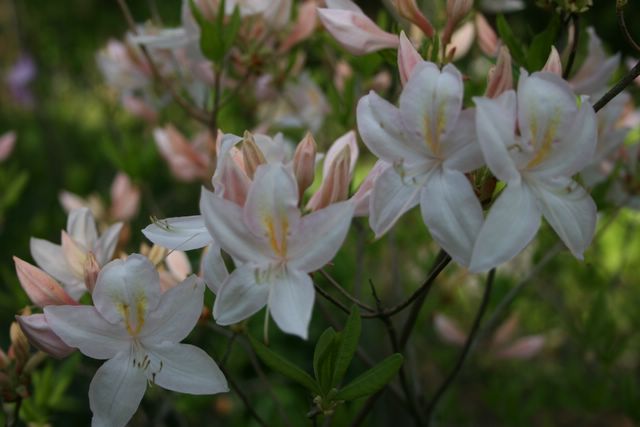
Azalea, 'White Lights'. Posted by Hello


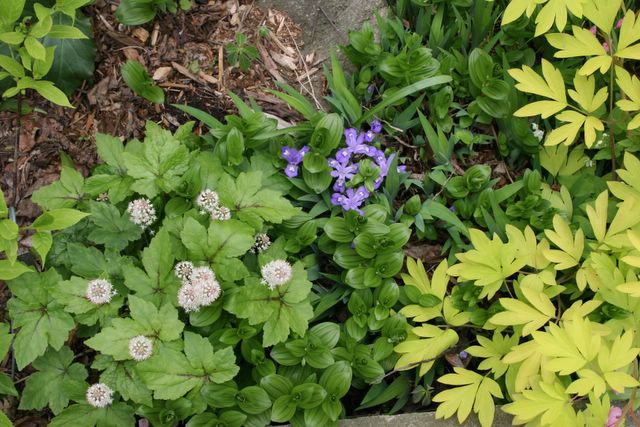
Dodecatheon jefferyi (shooting star). Posted by Hello


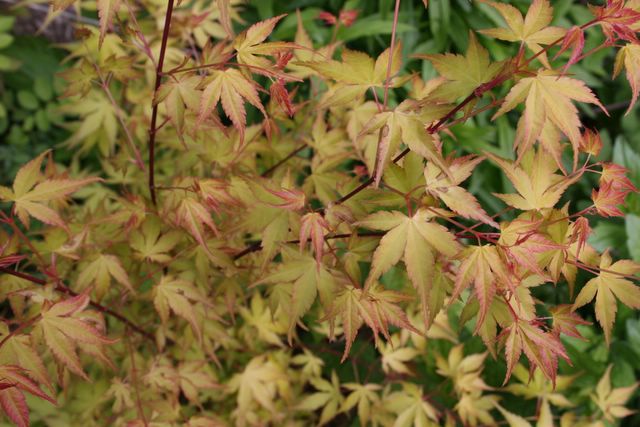
Japanese maple, 'Katsura'. Posted by Hello


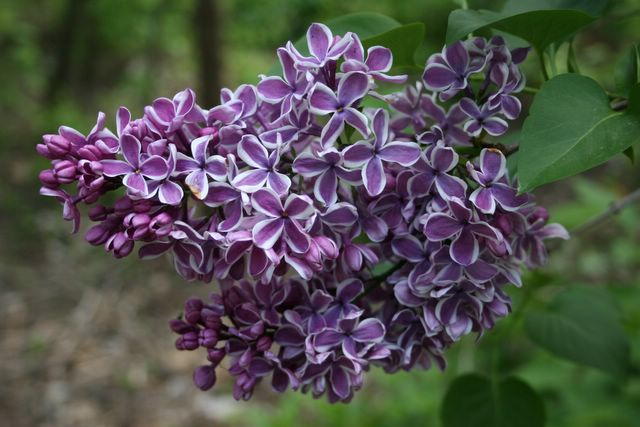
Lilac 'Sensation'. Posted by Hello

Friday, April 29, 2005

A Walk In The Garden Today


I had earlier talked about Azalea 'Pale Lilac'. Perhaps this picture captures it a little better, and below showing it with foliage in the background. Posted by Hello
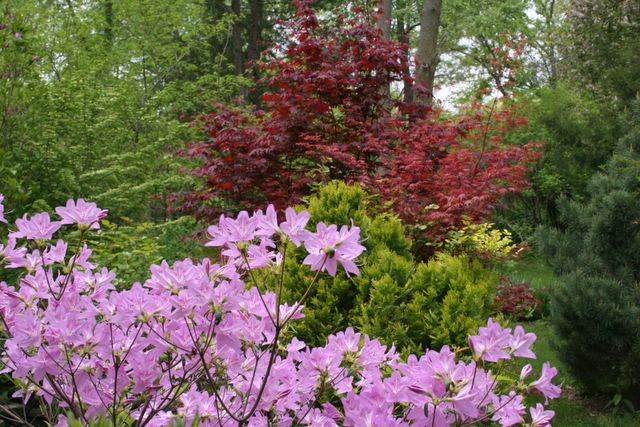

Posted by Hello


I had earlier showed Arisaema urashima; this picture better shows the long proboscis (rat-tail). Posted by Hello


Lilac. Posted by Hello


Tiarella, iris, and Dicentra 'Gold Heart'. Posted by Hello


Small, furry friends. Posted by Hello


Primula sieboldii. Posted by Hello


Primula frondosa. Posted by Hello


Daffodil with rhododendron foliage. Posted by Hello


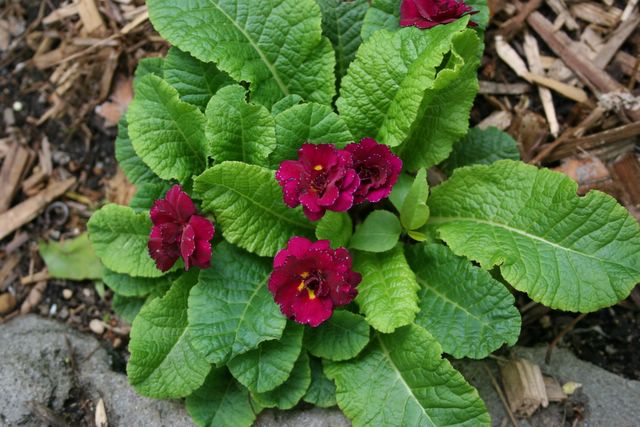
Primula 'Rosetta Red'. Posted by Hello


Primula 'Sunshine'. Posted by Hello


Primula 'Paragon'. Posted by Hello


Hosta and bluebells. Posted by Hello


Flowering crab and blue spruce. Posted by Hello


Heuchera 'Silver Scrolls'. Posted by Hello


Epimedium. Posted by Hello


Hosta 'Invincible'. Posted by Hello

Thursday, April 28, 2005

Hissy Fit
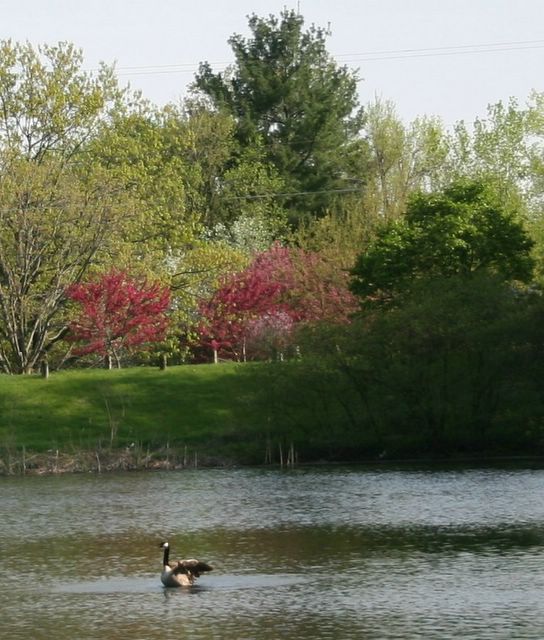

I like, on evening walks, to amble down the hill to the pond, to see what's going on there, but a pair of Canadian geese are nesting there and start honking like crazy and flapping their wings; hopefully they get their family raised before we decide to put the canoe in the pond! Of course the birds around here are all atwitter about the discovery of the Ivory Billed Woodpeckers in Arkansas. Our woodpecker menagerie here isn't bad: yellow-shafted flicker, red bellied, red headed, hairy, pileated, and downy. I leave the dead trees standing for them, though not too long ago I was out on the deck and a dead tree across the ravine came crashing down, and rolled down hill with a roar. In my backpacking days we called them widowmakers. Posted by Hello

A Walk In The Garden Today


Trillium luteum. Posted by Hello


Worm's eye view. Posted by Hello


Painted fern. Posted by Hello


Heuchera. Posted by Hello


Japanese maples. Posted by Hello


Posted by Hello


Posted by Hello


Azalea, 'Klondyke'. Posted by Hello


Hosta, 'June'. Posted by Hello

Wednesday, April 27, 2005

Cameraman

There are days around here when I wish I had a camera screwed to the top of my head. This morning I walked up the driveway to get the paper, and there was a coyote at the edge of the road. We looked at each other for a few seconds, and he melted into the brush. Then later I was walking down the path and a deer came running right by me and ran off down the hill, with Sadie, one of our kitten-cats in hot pursuit, right on the deer's heels. I'm sure the cat just took up the chase when the deer ran by, but it would have been a great video.

Azalea Pale Lilac


Many years ago I bought this azalea, called 'Pale Lilac' from Carlson's Gardens. I've used it, abused it, moved it through several gardens, whacked off pieces of it to start new plants, and it still thrives. It is the toughest shrub in the garden, and stone cold hardy, covered every year in blooms, whether it is in sun or shade; even when crowded by other shrubs, it still blooms. Photos for some reason just don't do this plant justice; it is way more gorgeous than the picture would indicate, reaching 6 feet in height and perhaps 7 feet across. The blossoms have a very faint fragrance individually, but with so many blooms, overall there is a nice fragrance. It spontaneously roots wherever the lower limbs touch the ground, so every year you can take a small plant or two. I wish I could tell you where to get one, but I never see it offered anymore. Why doesn't our K-Mart sell these instead of all the crap that won't survive our winter? It obviously has a lot of Poukhanense in it, but I think it's a bit larger and hardier.Posted by Hello

What's Blooming Today


Corydalis ochroleuca. The blue corydalis melts in our summers, but this little toughie, with its blue green foliage, and white flowers with yellow throats, is happy. Posted by Hello


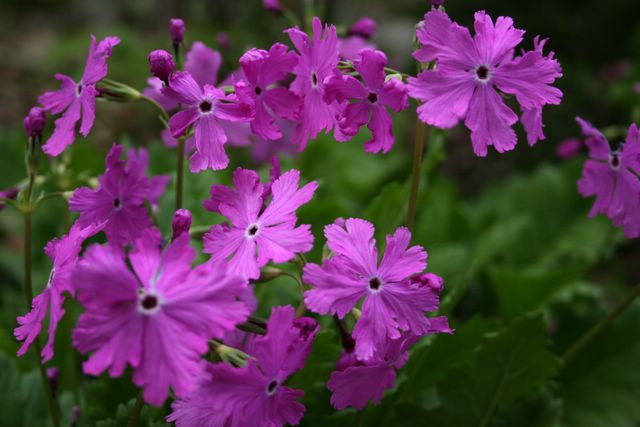
Primula sieboldii, with its snowflake-like flowers. Posted by Hello


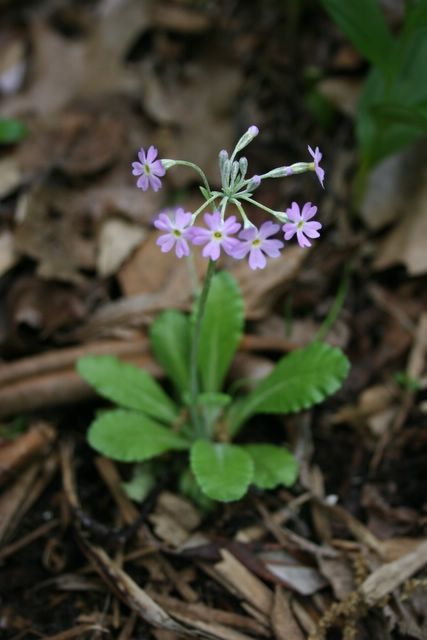
Alba form of Primula sieboldii. Posted by Hello


Rock garden, with phlox. Posted by Hello


The first Cypripedium parviflorum is open (I'll show more pictures of these as they open up. Posted by Hello


Tiarella 'Spring Symphony'. Posted by Hello

Tuesday, April 26, 2005

Oh Well...

My Mother was a remarkably resilient and complacent soul; how often I heard from her the expression "Oh well"! Of course, it could be mentioned that she was often gazing at me when she uttered these words. Be that as it may, today was a day when I could have used her sunny disposition, as there wasn't much else sunny here: after a tropical early spring, the upper midwest has been plunged back into almost February-like weather. Today started cold, and then got colder. As I ventured outside, a grey, billowing cloud bank suddenly rushed in over the ridge, dropping the temperature ten degrees in minutes, swirling right down to the ground, then pelleting everything with graupel, propelled almost horizontally by the frigid wind, turning the ground white. I beat a hasty retreat, and turned on the gas fireplace. Oh well! On top of that, in the morning Liz flies to Orlando for the Oncology Nursing Congress, where it is predicted to be 80-85 degrees. The only good news is that the supermarket has Tombstone pizzas on sale, three for ten dollars, so I won't starve. I hauled the step ladder up to our closet so Liz could get her suitcase down from the shelf; when I told her the ladder was ready, she said "Well, I guess I'll go do it now, it's probably better to do it sooner rather than latter." God, I love that girl!

How About THEM Apples!


Our woods are full of Podophyllum peltatum, the Mayapple, and a very attractive plant it is. However, there are a number of Asian species that are very interesting. This is Podophyllum hexandrum, the Himalayan Mayapple, just opening, and showing its pinkish flowers. It is widely available now (I've seen it for as little as $5) and it seems to be as hardy for me as peltatum. Posted by Hello


This is the leaf of hexandrum fully opened; a gorgeous foliage plant. The foliage doesn't die back with hot weather like our native peltatum, but the spots do fade. Posted by Hello


The red fruit of Podophyllum hexandrum; I now have babies scattered around the garden. Posted by Hello


Podophyllum pleianthum, Chinese Mayapple. It has impressive, large, waxy leaves. It arises from the ground very early in the spring, so should be protected if temps drop below 32. I don't ordinarily have plants that need to be coddled in any way, but for these Chinese Mayapples, I make an exception. Posted by Hello


I think this is actually a hybrid of pleianthum X versipille, just coming up. The multiple flower buds (which will form reddish flowers that smell of carrion) can be seen. Like its pleianthum parent, this comes up very early and can be badly damaged by sub-freezing temps, so I cover it with a big pot if a freeze is forecast. Posted by Hello


This is the versipille X pleianthum, more fully open. Posted by Hello


This is Podophyllum veitchii (delavayi). It comes up later than pleianthum, so is less prone to freeze damage on that basis; I suspect the leaves themselves would also be hardier, as they have thicker substance, but I haven't tested it yet. When the leaf first starts emerging from the ground, it is the most amazing deep maroon-red color, then as the leaf opens, it shows the above pattern; just a jaw-dropping color and pattern. I just acquired this last year so don't know too much about it yet, but am looking forward to seeing it as a large clump.Posted by Hello


This is Podophyllum 'Kaleidoscope', a hybrid of two or three of the species, selected by Terra Nova Nurseries. It's a gorgeous thing, with large, patterned leaves. I'm not convinced its leaves are any neater than hexandrum, but Kaleidoscope retains its spots during the growing year (in fact the patterning becomes more prominent as the year progresses), whereas the spots fade in hexandrum. The downside to Kaleidoscope is that (probably from its Pleianthum parent) it inherits the tendency to come up VERY early in the spring, and I suspect it would be damaged by sub-freezing temperatures if not covered (I haven't tested it, and probably won't... old flower pots are a lot cheaper than this plant)! It does seem very vigorous; I just planted it last spring as a single-stalked plant, and this year it produced three stalks. There is another new Terra Nova hybrid, 'Spotty Dotty', that looks way cool, but too pricey yet. Posted by Hello

Monday, April 25, 2005

What's Blooming Today


Fritillaria pallidifloria. Posted by Hello


I had earlier showed twinleaf in bloom; this is the seedhead, which is quite cool also. Posted by Hello


Fritillaria acmopetala. Posted by Hello

Sunday, April 24, 2005

What's Blooming Today


Variegated leafed Solomon's seal. Posted by Hello


The Himalayan mayapple opening its flowers and its heavily spotted leaves. Posted by Hello

The Cold Facts

This morning I didn't think we had any frost damage in the garden, but by this afternoon it was apparent that three types of plants had fairly signifigant foliage damage: Hydrange macrophylla Endless Summer, Astilboides tabularis, and Rodgersia (the latter the worst). Just a flesh wound; could have been worse.

Dodging The Bullet


I went out into the garden early this morning to see what the rising sun would show; April had been remarkably warm, so that foliage and flowers are two weeks ahead of normal, then late this week it became sultry and gritty, with the wind blowing harder and harder out of the southwest, winding around a huge low pressure area covering half the country, with storms boiling up in the plains and moving east; then on the back side of the low a huge pool of frigid air has poured down from the Yukon, with predicted temperatures of 26-28 degrees last night, a drop of almost 60 degrees. I covered a few special plants yesterday with pots, as the cold wind blew ragged clouds across the sky, but I just hoped for the best for the rest of the garden. During the night the north wind rumbled in the tree tops, as a clear full moon lit the landscape, and I kept an eye on the temperature, as it dropped into the 30's before I went to bed at midnight. Fortunately, the temperature bottomed out just at 32, with only light frost, so I couldn't see any damage this morning... we dodged the bullet this time; meanwhile gardens in lower Michigan are being buried by a foot of snow. Here the sun is shining with a bright blue sky; the goldfinches are flitting through the trees like little shafts of light, and all is well. Posted by Hello

Saturday, April 23, 2005

Fritillary Find?


Fritillaria meleagris, the snake's head fritillary, is a lovely spring flowering bulb. I have this bulb scattered here and there in the garden, but this spring my eye was suddenly caught by one particular pair of bulbs blooming under an azalea. The typical flower is as above, bell-shaped, with nice checking. This one pair of bulbs had much more open flowers, of a deep, rich mahogany red, with very heavy substance, and very heavy checking; a VERY striking flower. I have looked on-line, and there are a few selected clones of this plant available, but I see nothing similar to what is growing here. Could I have something special growing? Time will tell. Posted by Hello


Fritillaria meleagris "open clone", showing the open flowers, with richly colored, heavy and heavily patterned petals. Posted by Hello


Fritilaria meleagris "open flower" seen from the back. Posted by Hello

What's Blooming Today


Our native prairie trillium (recurvatum), with its deep oxblood flowers. Posted by Hello


Trillium underwoodii. Posted by Hello


Corydalis lutea. Posted by Hello


Epimedium Enchantress. Posted by Hello


Rhododendron, Manitou has the softest baby pink flowers on a very neat shrub that is attractive both in and out of bloom, getting no taller than 2-3 feet. Posted by Hello

Friday, April 22, 2005

What's Blooming Today


Epimedium davidii. Posted by Hello


Semiaquilegia ecalcarata is a refined cousin to aquilegia; finer, more fern-like foliage, less than a foot tall, with many small, beautiful, dusty plum-rose flowers. It really needs a little spot all to itself in the garden, as I don't think it can take dryness and competition as well as it's lustier cousin. My plant was never terribly happy, and I thought I had lost it, but it seeded into a crevice in the rock retaining wall, where it has been completely happy, and I've grown several more from seed now. It seemed to be accepted that semiaquilegia and aquilegia would not interbreed, but I just saw where it has been accomplished (I believe it is called Night Dancer strain), and I would think it should be lovely.Posted by Hello

Thursday, April 21, 2005

Double Flowered Peach


I always had coveted the double flowering peach, which I saw when I lived in California, but I never thought it would grow, or at least flower, in our climate. Then, one day I was driving through a small Iowa farm town, and almost screeched to a halt; there in an ordinary front yard was the object of my desire, in full bloom. Now it's blooming in my garden. In the fall, I seldom get to sample its small, tasty peaches, as the racoons clean them out in one moonlit night, leaving clean peach pits all over the grass. It's ok though; I get the flowers. Posted by Hello

What's Blooming Today


The royal azalea, schlippenbachii; its soft, baby pink flowers are very large, like beautiful butterflies landed on a shrub that can become almost as big as a lilac.It's native to Korea and Manchuria, and has been quite hardy for me, previously in a 4b garden, and now 5a. It's said to have a faint fragrance, but it's mighty faint (it's only negative). It does need protection from the afternoon sun, as its large leaves burn easily, developing brown edges in the late summer if too much sun or not enough water, and its blossoms are so large and delicate, that they won't last well if too much wind hits them, so a nice protected spot is best for this shrub, but it's the most beautiful plant in any garden when in bloom. Posted by Hello


Bellflower. Posted by Hello


Primula denticulata. Posted by Hello


Aisaema urashima, Jack in the pulpit. Posted by Hello


Dodecatheon meadia, the shooting star native to the Midwest. Posted by Hello


Nice batch o' morels. Posted by Hello

Wednesday, April 20, 2005

Asassin Wren


There are few things more cheery in the spring garden than the house wren trilling from a low branch near the garden path. This tiny bundle of energy and song is the personification of the joy of spring. His cheeriness, though, disguises an asassin's heart; the house wren is a little home-wrecker and killer. We have four bird houses; two wren houses with small openings, and two generic birdhouses open to all, which usually means the latter two houses end up having house sparrows move in. They move in, but they often just as abruptly are evicted when the wrens show up. Now, like most of us, I always was a little contemptuous of house sparrows; dirty, noisy, interlopers. However in reading one of my bird books, the author grew lyrical in describing this little bird as it exists in rural areas; sooty and common in cities, but shiny and handsome in the country, so I started looking at them anew, and the male at least, really is a nicely co